Window installers left jagged edges around your new frames? We repair reveals, jambs, and damaged sheetrock so your new windows look built-in and flawless.

Window and door installers are focused on one thing: getting the window in, sealed, and functional. They’re not drywall contractors. Most of them will remove the old window, prep the rough opening, install the new unit, insulate around it, and move on to the next job. What they don’t do is repair the surrounding sheetrock that got dinged, chipped, or cut during removal.
In Philadelphia’s older homes—especially row homes built before 1950—this problem gets worse. Frames aren’t always square. Walls might be plaster over lath in some areas and drywall in others. The installer has to make the window fit, and that sometimes means cutting back more material than planned. By the time they’re done, you’re left with gaps, rough edges, and a window that technically works but looks unfinished. That’s not their fault—it’s just not their trade.

When a window gets replaced, the old unit has to come out first. That means prying off interior trim, cutting through caulk and paint, and sometimes chipping away old plaster or drywall that’s bonded to the frame. Even in the most careful hands, the sheetrock around the opening takes a hit.
The window reveal—the interior edge where the wall meets the window frame—often ends up jagged or uneven. If the new window is a different size than the old one, there might be gaps that need patching. If the installer had to shim the window to get it level, those shims can push against the drywall and crack it. And if they used a reciprocating saw or pry bar near the frame, there’s a good chance the surrounding sheetrock got damaged in the process.
Once the window is in, the installer will usually caulk the gap between the frame and the wall. That’s fine for sealing, but it doesn’t fix the cosmetic damage. You’re left with a functional window surrounded by rough, unfinished drywall. It’s not something you can just paint over. The texture doesn’t match, the edges are visible, and every time you walk past that window, you notice it.
Philadelphia homes add another layer of complexity. Many houses here were built before 1950, and the framing lumber has settled, shifted, or warped over decades. When a new window goes into an old opening, the installer has to work around those imperfections. That often means cutting away more drywall to make room for shims or to get the window plumb. The result is more damage than you’d see in a newer home, and more work required to make it look right again. In neighborhoods like Fishtown, Queen Village, or South Philly, where row homes dominate, this kind of window replacement drywall damage is something nearly every homeowner deals with at some point.
There’s a big difference between a window that works and a window that looks like it belongs. Functionally, your new window might be perfect. It opens and closes smoothly, the glass is sealed, and it’s not leaking air. But if the drywall around it is rough, patched with the wrong texture, or visibly damaged, it doesn’t feel finished. It feels like the job got 80% done and then stopped.
This isn’t just about aesthetics. Gaps and rough edges around a window frame can let in drafts, even if the window itself is sealed. Damaged drywall can also trap moisture if it’s not properly finished, which can lead to mold or further deterioration over time. And from a resale perspective, buyers notice unfinished work. A window that looks hastily installed raises questions about what else might have been done quickly.
Getting the sheetrock finished properly means repairing the reveals so they’re smooth and square, patching any gaps or damaged areas, matching the texture to the rest of the wall, and priming and painting so the repair disappears. That’s not a five-minute job. It requires the right materials, the right tools, and experience working with older homes where nothing is quite standard.
In Philadelphia, PA, where so many homes have unique construction quirks, this kind of finish work matters even more. A row home built in 1920 doesn’t have the same wall thickness or framing as a house built in 1980. The drywall might be layered over old plaster. The studs might not be evenly spaced. Getting a clean, professional finish around a new window in that environment takes someone who knows what they’re dealing with. It’s not about slapping on some spackle and calling it done—it’s about understanding the structure and working with it to get results that last.
Want live answers?
Connect with a Sharpe Drywall expert for fast, friendly support.
Repairing drywall around a new window or door isn’t complicated in theory, but it requires precision. The goal is to make the repair invisible—smooth edges, matched texture, and a finish that blends seamlessly with the rest of the wall. That starts with assessing the damage and figuring out what actually needs to be fixed.
If the damage is minor—small chips, rough edges, or hairline cracks—the repair might just involve sanding, applying joint compound, and feathering it out so it blends. If there are gaps or larger damaged areas, you’ll need to cut back to solid drywall, install backing if necessary, and patch with new material. The key is getting the edges clean and square so the patch sits flush with the existing wall.
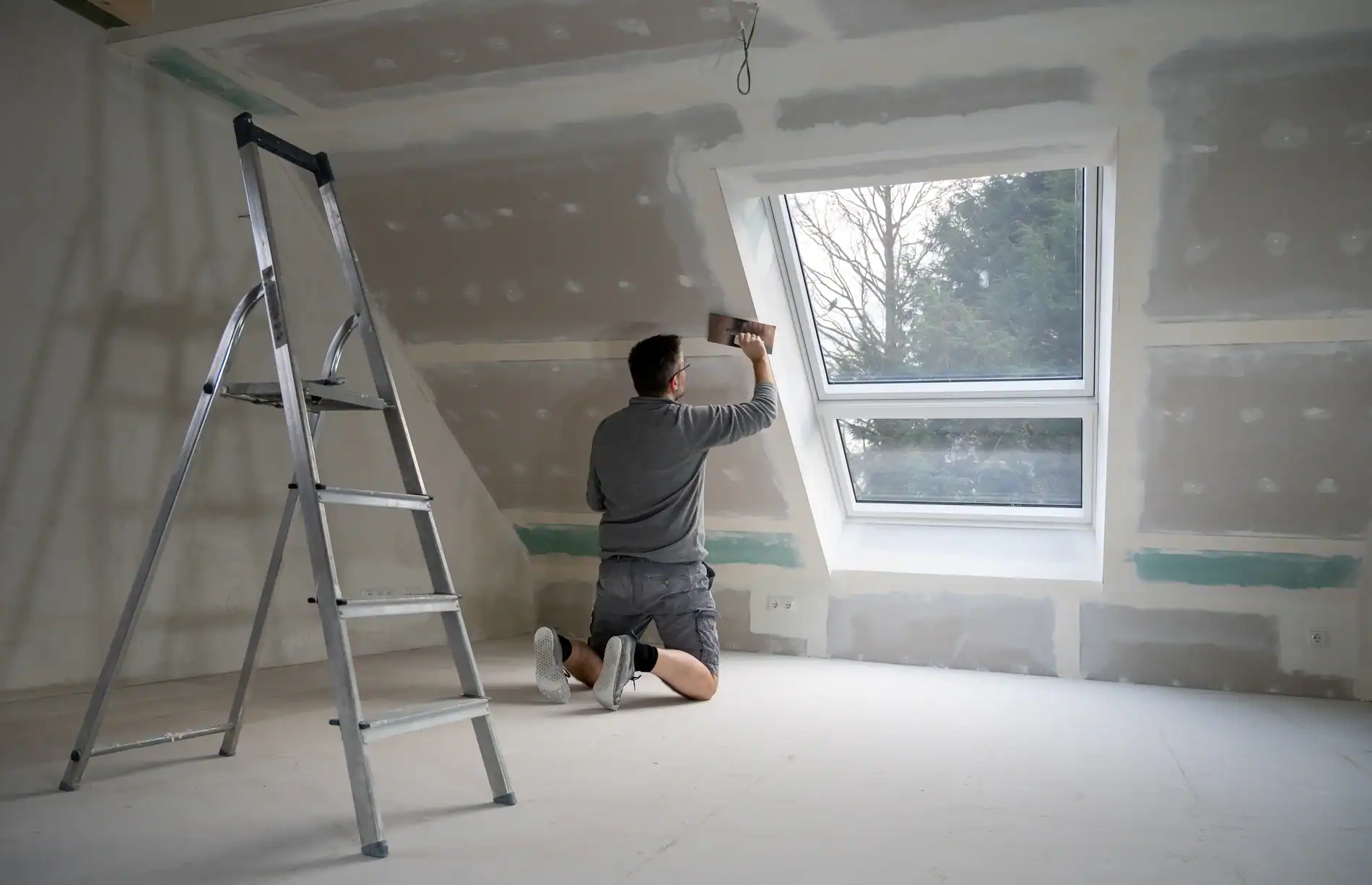
The reveal is the most visible part of the repair. It’s the interior edge of the wall where it meets the window frame, and it needs to be straight, smooth, and square. If the installer left jagged edges or gaps, those need to be cleaned up first. That usually means cutting away any loose or damaged drywall with a utility knife, creating a clean edge to work from.
Once the edge is clean, the next step is building it back up. For small gaps, joint compound applied in thin layers works well. Each layer needs to dry completely before the next one goes on, and each layer gets sanded smooth. For larger gaps, a strip of drywall cut to fit the opening provides a more solid base. That strip gets secured to the framing or to the back of the existing drywall, then taped and mudded like any other drywall joint.
The jamb—the vertical sides of the window opening—gets the same treatment. If the installer had to cut back the drywall to fit the window, there might be a visible gap between the frame and the wall. That gap needs to be filled and finished so it looks intentional, not like an afterthought. In older Philadelphia homes, where walls might be thicker or thinner than standard, getting the jamb depth right is critical. If it’s too shallow, the window looks recessed. If it’s too deep, it looks awkward. The goal is making the window look like it was always there.
Texture matching is where a lot of DIY repairs fall apart. If the rest of your wall has an orange peel or knockdown texture, the repair needs to match. That requires the right tools and technique. Spraying or rolling on texture compound, letting it set up to the right consistency, and then knocking it down or leaving it as-is depending on the finish. If the texture doesn’t match, the repair stands out no matter how smooth the underlying surface is. In a city like Philadelphia, where homes span a century of construction styles and finishes, matching texture isn’t always straightforward. It takes experience to get it right.
Door replacements create similar issues, but the damage is often more extensive. Removing an old door frame usually means prying off trim, cutting through old paint and caulk, and sometimes chipping away drywall that’s been there for decades. If the new door is a different size than the old one, there might be gaps at the top or sides that need patching. And if the installer had to adjust the rough opening to get the door plumb, there’s a good chance the surrounding drywall got damaged in the process.
The repair process is similar to window work, but door openings are taller and more visible. A rough patch around a door is something you walk past multiple times a day, so it needs to be clean. Start by cutting away any damaged drywall to create a clean edge. If there’s a gap between the new frame and the wall, fill it with a backer material—foam, wood, or drywall strips—then tape and mud over it. The goal is creating a smooth transition from the wall to the door frame with no visible seams or rough spots.
One common issue with door installations is cracks forming above the frame. Doors are heavy, and the framing around them shifts slightly over time. If the drywall isn’t properly supported or if the installer didn’t account for that movement, cracks can appear within weeks of the installation. Fixing those cracks means more than just filling them with compound. It usually requires reinforcing the area with tape or mesh, applying multiple coats of compound, and making sure the underlying framing is stable. Otherwise, the crack just comes back.
Philadelphia’s older homes add another wrinkle. Many row homes have narrow doorways with thick plaster walls. When a new door goes in, the installer might have to cut through multiple layers of material—plaster, lath, old drywall patches—to get the frame to fit. That leaves a mess that’s more complicated than a simple drywall patch. Getting it finished properly means understanding what’s behind the wall and working with those layers to create a solid, smooth surface. It’s not a job for someone who’s just done a few YouTube repairs. It requires knowing how these old houses are put together and how to work with materials that weren’t designed to be taken apart and put back together.
New windows and doors are an investment. You paid for better insulation, improved curb appeal, and a more comfortable home. You shouldn’t have to live with rough, unfinished drywall around those new installations. Getting the sheetrock repaired properly doesn’t just make your home look better—it protects that investment and ensures the work is actually complete.
The repairs aren’t complicated, but they do require the right skills and materials. Smooth reveals, matched textures, and invisible patches don’t happen by accident. They happen when someone who knows drywall takes the time to do it right. If you’re in Philadelphia and dealing with damage from a recent window or door replacement, we can handle it. We work with older homes throughout Montgomery County, Bucks County, and Philadelphia, understand the quirks of local construction, and finish the job so your new windows look like they belong.
Summary:
Get in Touch with Sharpe Drywall
Share: