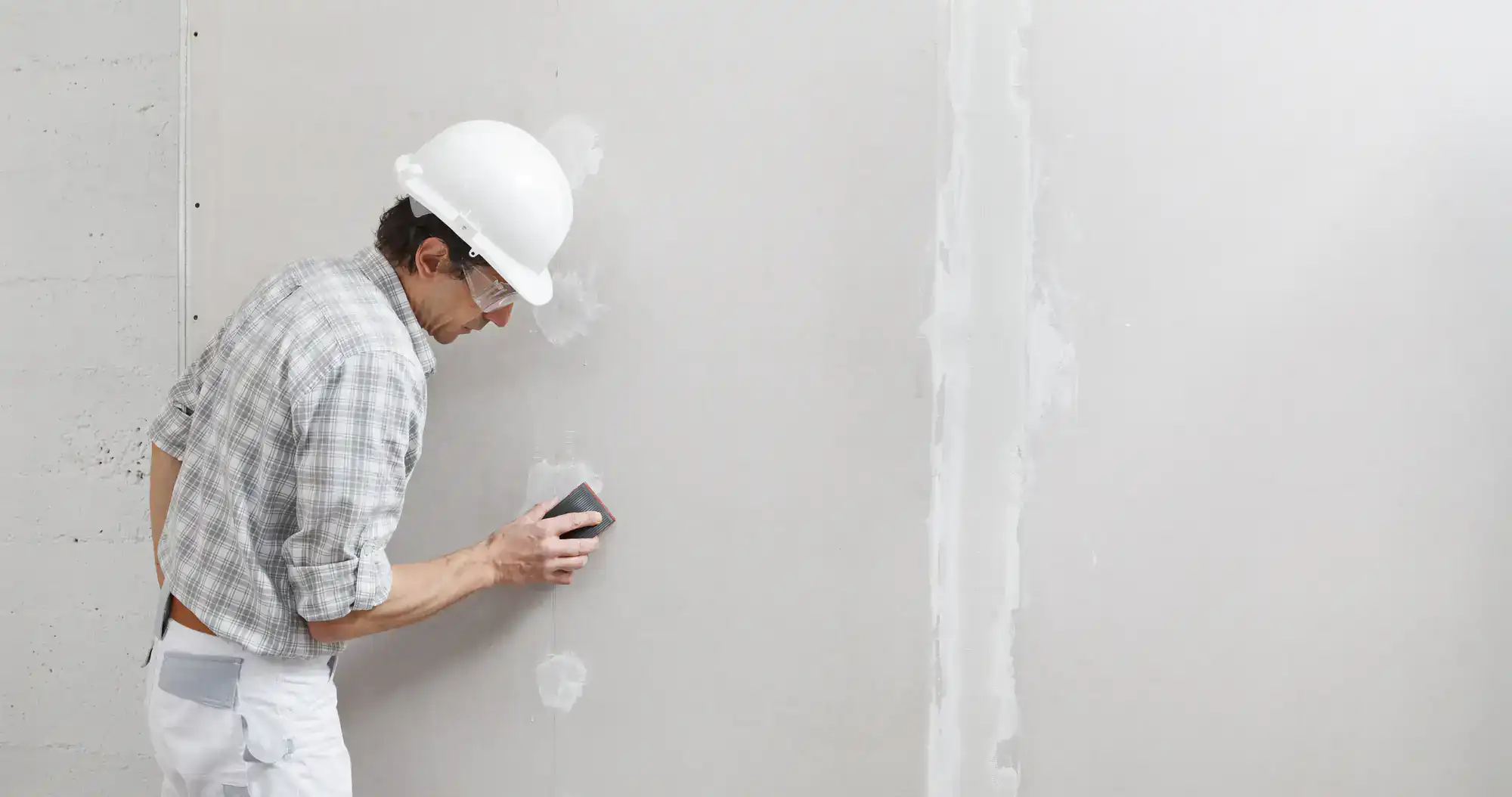
Your walls disappear. That’s the goal. No visible seams, no bumps catching the light, no texture that screams “patch job.” Just smooth, even surfaces ready for paint.
Most drywall problems in Overbrook Farms homes come from rushed finishing or someone who didn’t know how to match the existing texture. You’re left with repairs that look obvious under certain lighting or walls that need another round of work before paint can go on.
When finishing is handled correctly from the start, you skip the do-overs. The joints blend completely. The texture matches what’s already there. And when your painter shows up, they’re working with a clean canvas instead of trying to hide someone else’s mistakes.
We’ve been handling drywall installation and finishing across Montgomery, Bucks, and Philadelphia counties for years. Every technician on our team is fully licensed and insured, which matters more than it sounds like it should—especially when you’re dealing with older homes that have quirks most contractors don’t expect.
Overbrook Farms has a mix of housing stock. Single-family homes from the early-to-mid 1900s. Rowhouses with original plaster. Properties that have been updated multiple times with different materials underneath. Knowing how to work with what’s already there—and what’s likely hiding behind the surface—makes the difference between a repair that lasts and one that cracks in six months.
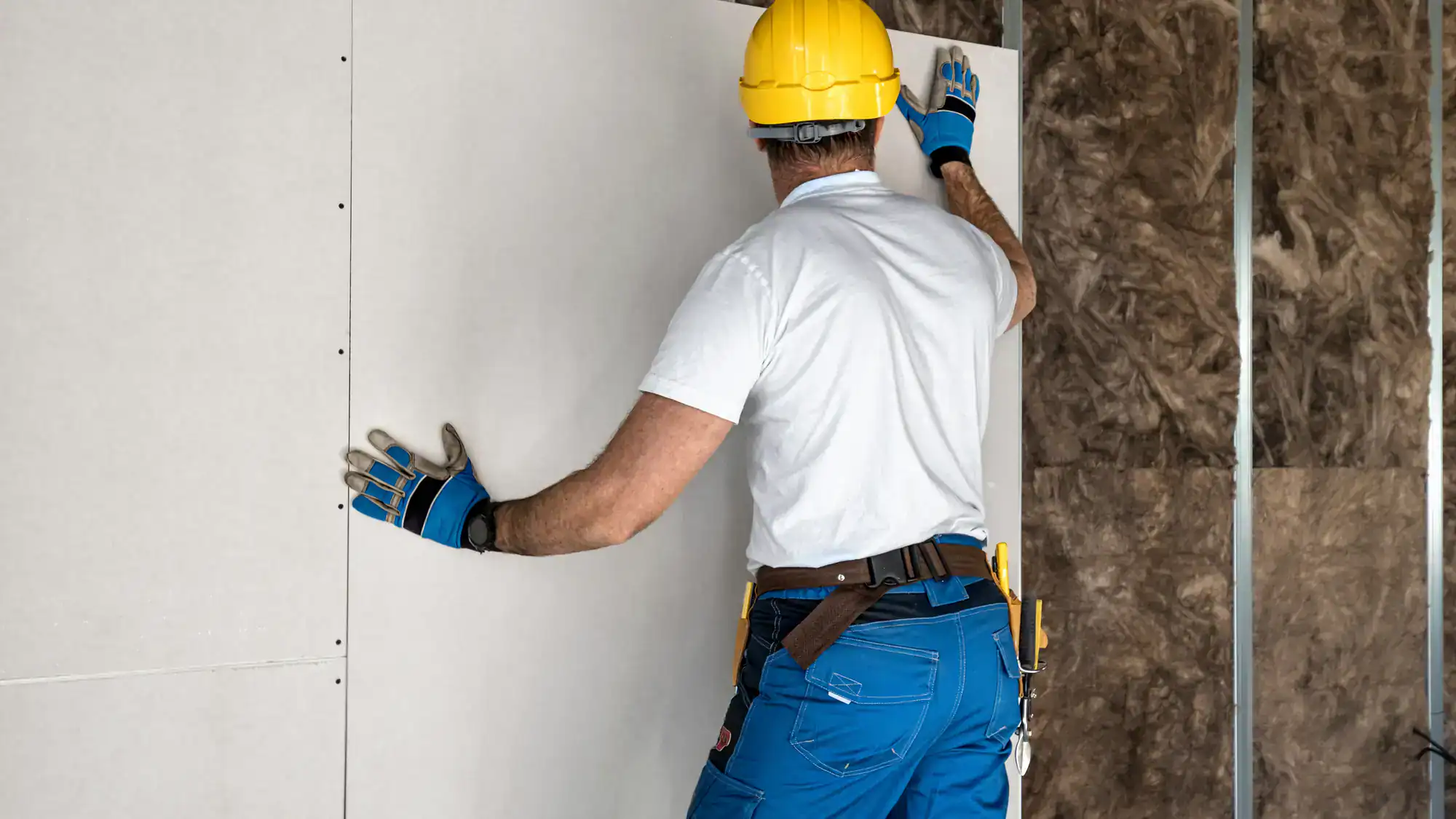
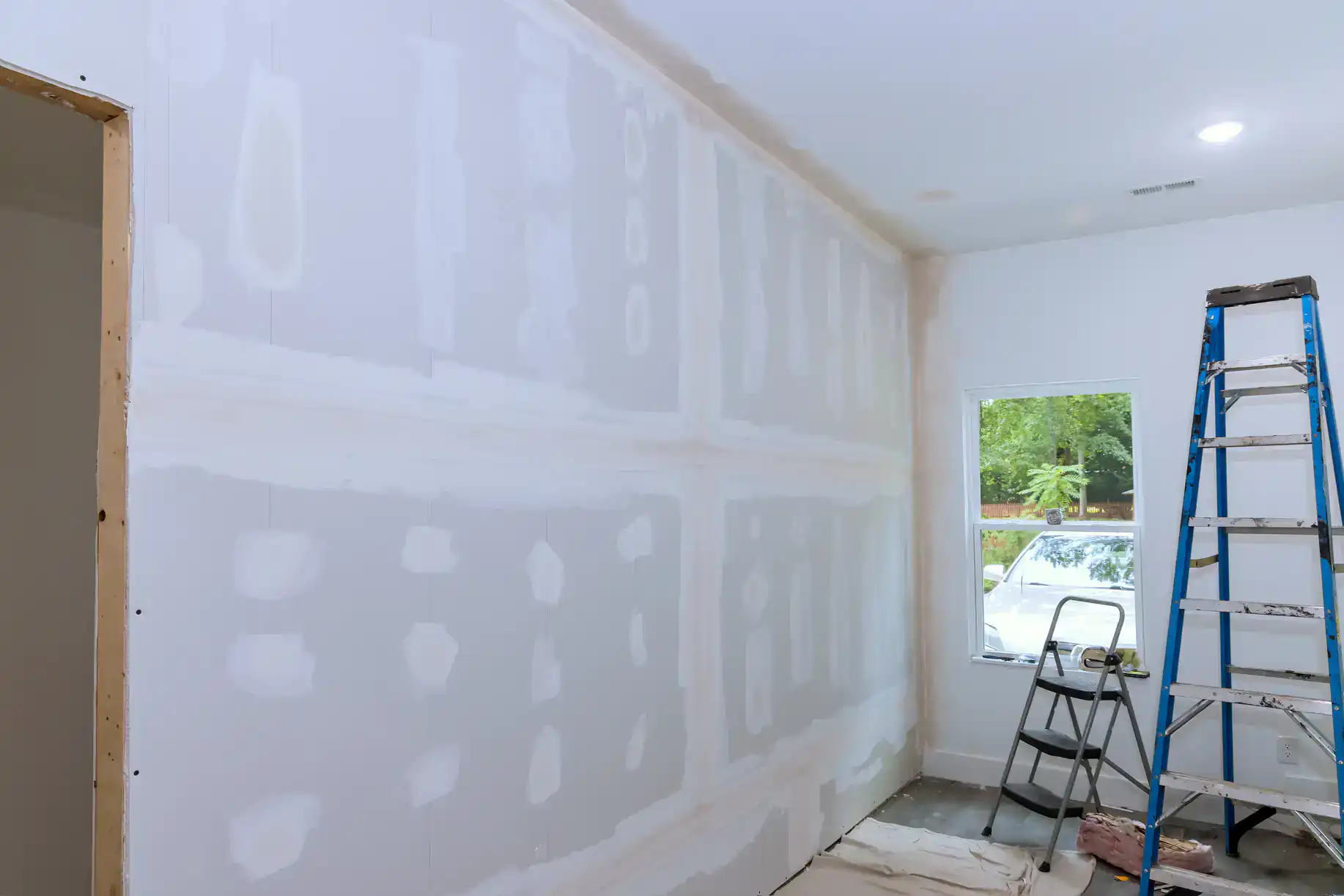
First, the damaged or new drywall gets prepped. Edges are clean, screws are set properly, and any gaps or cracks get addressed before tape goes on. Skipping this step is where most problems start.
Next comes taping. Paper or mesh tape is applied over every joint and corner, embedded in a thin layer of joint compound. This is what holds everything together long-term. The tape has to sit flat with no bubbles or wrinkles, or you’ll see it later.
Then the mudding process starts. Multiple coats of joint compound get applied, with each layer feathered wider than the last. This is drywall taping and mudding done in stages—not all at once. Each coat needs to dry completely before the next goes on. Rushing this is how you end up with cracks.
After the final coat dries, everything gets sanded smooth. If you’re matching texture, that’s applied now. If it’s a smooth finish, this is where a Level 5 skim coat might go on for areas with critical lighting. Then it’s cleaned up, inspected, and ready for primer.
Ready to get started?
Every drywall finishing project includes proper joint treatment, which means taping, multiple coats of compound, and sanding to the finish level your project needs. For most residential work, that’s a Level 4 finish—smooth enough that paint covers evenly without showing imperfections.
Texture matching is part of the process when you’re repairing existing walls. Overbrook Farms homes often have orange peel, knockdown, or smooth finishes from different decades. Matching that texture so the repair blends in takes the right tools and enough experience to know how the material behaves as it dries.
Cleanup happens as we go. Drop cloths and plastic sheeting protect your floors and furniture. Dust from sanding gets contained as much as possible, and everything gets vacuumed before we leave. You shouldn’t have to spend your weekend cleaning up drywall dust because someone didn’t bother to cover things properly.
Moisture-resistant drywall and compound get used in kitchens and bathrooms. Fire-rated materials go where code requires them. The goal is a finished surface that lasts without needing touch-ups every couple of years because the wrong materials were used or corners were cut during installation.
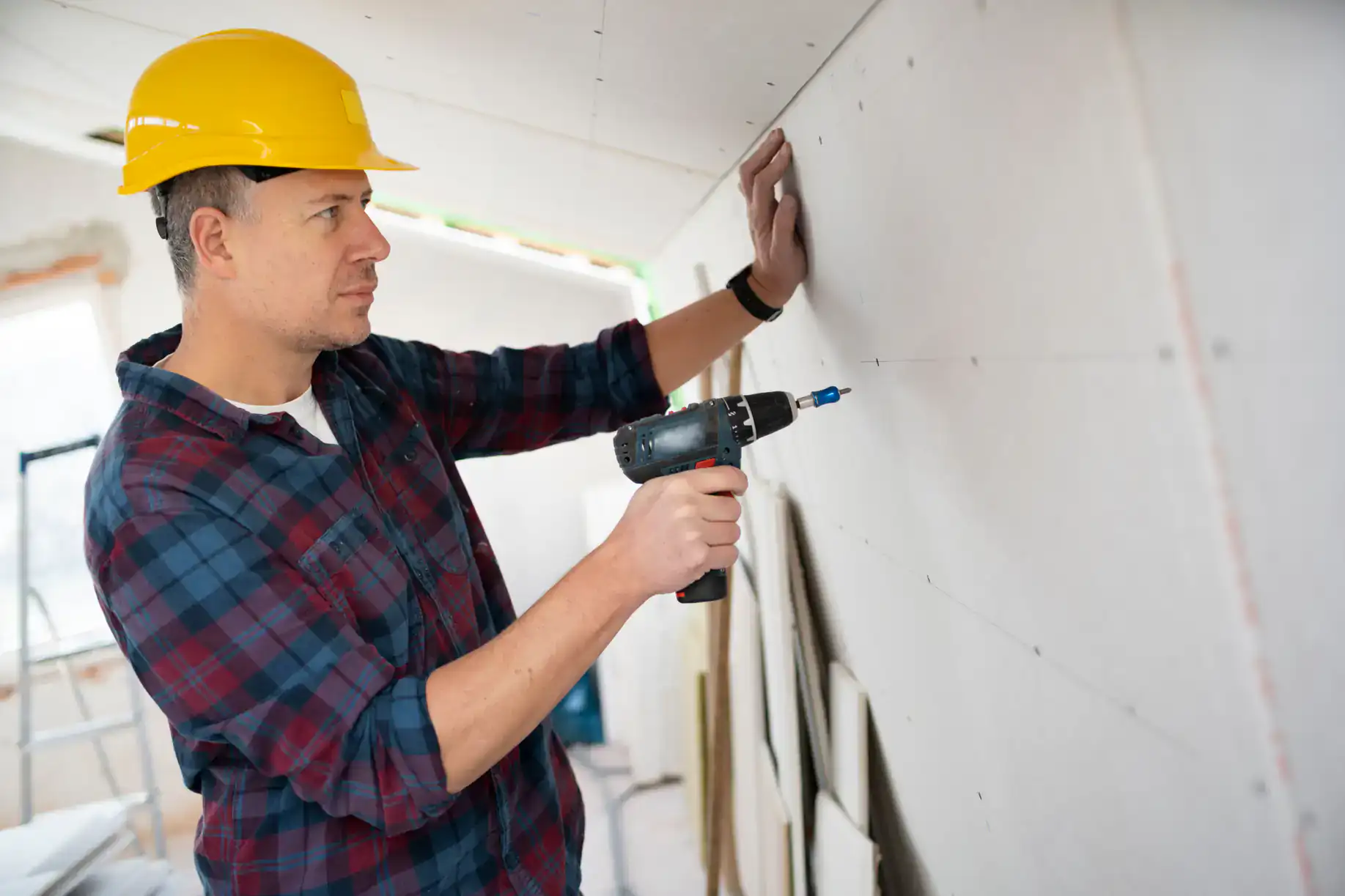
Most drywall finishing work is completed within one to three days, depending on the size of the area and how many coats are needed. Small repairs—a patch or two—can often be finished in a single day if the damage is straightforward and drying conditions are good.
Larger projects, like finishing an entire room or basement, take longer because each coat of joint compound needs time to dry before the next one goes on. Trying to speed that up by applying coats too soon leads to cracking and uneven surfaces. Proper drying time between coats is what makes the finish last.
If you’re matching texture or need a Level 5 skim coat finish, expect an extra day for application and drying. Weather and humidity affect drying times, especially in older Overbrook Farms homes that might not have central air running year-round.
Yes, texture matching is a standard part of drywall repair work in Overbrook Farms. Most homes in the area have some type of texture—orange peel, knockdown, skip trowel, or light splatter patterns that were popular in different decades.
Matching texture correctly means identifying what’s already there, using the right tools and compound consistency, and testing the pattern before applying it to the repair. The texture also needs to match in density and depth, not just pattern. A repair that’s too heavy or too light stands out even if the pattern looks similar.
Older homes sometimes have textures that were applied by hand or with tools that aren’t common anymore. In those cases, replicating the look takes more time and testing, but it’s still doable. The goal is a repair that disappears once it’s painted, not one that you can spot from across the room.
Finish levels range from Level 0 (no taping or finishing) to Level 5 (a full skim coat over the entire surface). Most residential drywall finishing in Overbrook Farms is done to Level 4, which means joints are taped, multiple coats of compound are applied and sanded smooth, and the surface is ready for paint or texture.
Level 4 works well for walls with flat or low-sheen paint and standard lighting. It’s the industry standard for most rooms in a home. Level 5 is used when you have critical lighting—like large windows, harsh angles, or glossy paint—that would show even minor imperfections in the drywall surface.
A Level 5 finish involves applying a thin skim coat of joint compound over the entire wall, not just the seams. This creates a completely uniform surface with no variation in texture between the drywall paper and the joint compound. It adds time and cost, but it’s necessary in spaces where lighting conditions are unforgiving.
Drywall finishing costs in Overbrook Farms typically range from $1.50 to $3.50 per square foot for installation and finishing combined, depending on the finish level, ceiling height, and any complications like water damage or structural repairs that need to happen first.
Small repair jobs—patching a few holes or fixing cracks—usually run between $200 and $800 depending on how much prep work is involved and whether texture matching is needed. Larger projects, like finishing a basement or adding new walls, are usually priced by square footage with a detailed estimate that breaks out materials, labor, and finishing work.
Prices vary based on what’s already there. Older Overbrook Farms homes sometimes have plaster walls, uneven framing, or non-standard dimensions that take extra time to work with. Our upfront estimates include those factors so there aren’t surprise charges once the work starts. Transparent pricing means knowing what you’re paying for before anyone shows up with tools.
Yes, water-damaged drywall gets addressed before any finishing work happens. Water damage is common in Overbrook Farms because of the area’s proximity to Cobbs Creek and occasional basement flooding. Drywall that’s been wet needs to be cut out and replaced, not just patched over.
Finishing over water-damaged drywall leads to mold growth, weak spots, and repairs that fail within months. We remove the damaged section, inspect and dry out the framing behind it, and then install new moisture-resistant drywall if the area is prone to humidity. Only after everything is dry and structurally sound does taping and finishing begin.
If the water damage is extensive or there’s visible mold, that gets handled first by the appropriate specialists. Drywall finishing happens after the underlying problem is fixed and the space is safe to close back up. Rushing this process or covering up damage without addressing the source just creates bigger problems down the road.
Every technician working on drywall finishing projects in Overbrook Farms is fully licensed and insured. That’s not just a checkbox—it’s protection for your property and proof that the people doing the work meet Pennsylvania’s requirements for construction trades.
Licensed contractors understand local building codes, permit requirements, and the standards that inspectors look for during residential work. Insurance coverage means that if something goes wrong—damage to your property, an injury on site—you’re not left dealing with the liability or the cost of fixing it.
Unlicensed contractors might offer lower prices, but you’re taking on risk that isn’t worth the savings. If the work doesn’t meet code, if there’s an accident, or if the quality is poor and needs to be redone, you’re paying for it twice. Licensing and insurance aren’t extras—they’re the baseline for professional work that lasts.
Other Services we provide in Overbrook Farms