
You’re not looking at the patch anymore. That’s the difference between a professional drywall patching job and a DIY attempt that shows through every time the light hits it wrong.
Most homeowners in Frankford Valley, PA deal with the same frustration. You patch a hole, wait for the drywall mud to dry, paint over it, and then spend the next five years staring at that slightly different texture or the way it catches light differently than the rest of the wall. The issue isn’t always the hole itself – it’s everything that happens after you fill it.
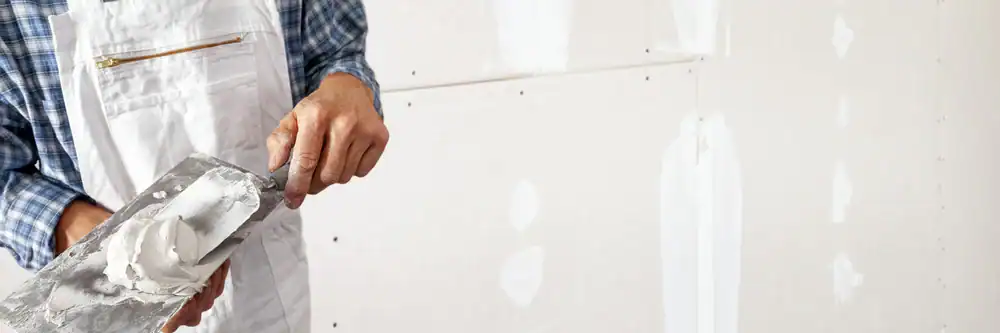
Professional patching means understanding dry time for each coat of joint compound, knowing how to feather the edges so there’s no visible ridge, and using the right prime and paint process so the repair blends completely. It’s technical work that looks simple when it’s done right. You shouldn’t be able to find where the damage was, even if you’re looking for it.
We serve homeowners throughout Montgomery and Bucks County with fully licensed and insured drywall services. We’re not a handyman service that does drywall on the side – this is what we do, and we use the materials and techniques that hold up in homes like yours.
Frankford Valley homes deal with typical settling cracks, water damage from bathroom leaks, and the occasional doorknob through the wall. We’ve seen it all, and we know which repairs need just a quick patch and which ones signal a bigger issue that’ll come back if you don’t address it properly.
You’re hiring people who show up with the right tools, use moisture-resistant compounds where needed, and understand local building requirements. That matters more than most homeowners realize until they’ve paid twice for the same repair.
First, we assess the damage to determine what’s causing it. A crack that keeps coming back usually means there’s movement in the structure or an issue with how the original drywall was installed. We fix the underlying problem, not just the visible symptom.
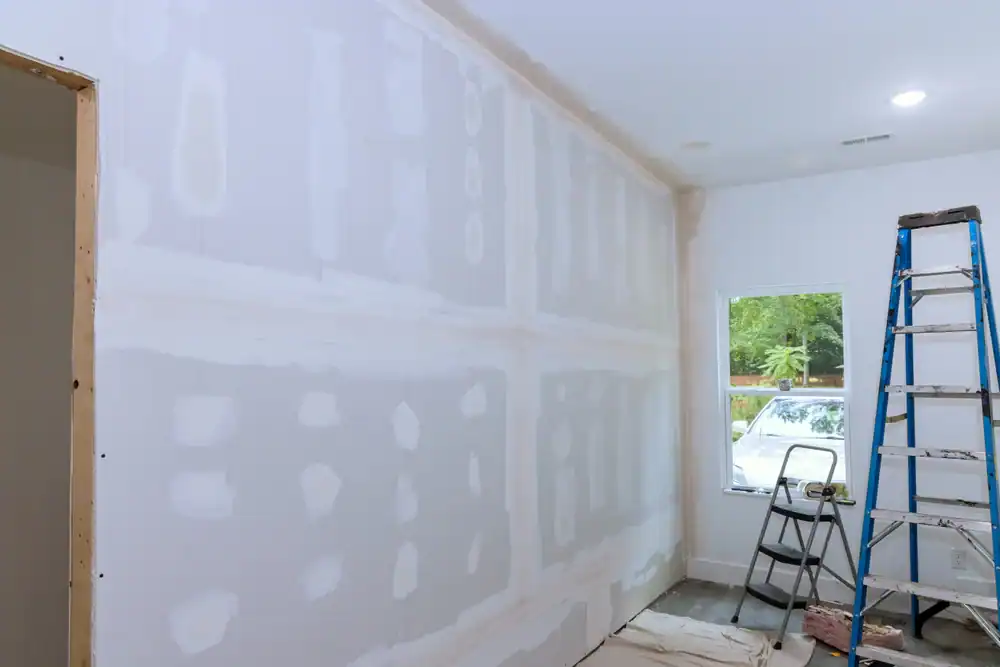
Next comes the actual patching. We cut out damaged material if needed, secure backing, and apply joint compound in layers – not all at once. Each coat needs proper dry time before the next one goes on. Rushing this is how you end up with cracks in your repair three months later.
Then we feather the edges. This is where most DIY jobs fail – you need to blend the patch into the surrounding wall gradually so there’s no ridge or visible line. It takes more joint compound and more square footage than you’d think, but it’s the only way to make the repair invisible.
Finally, we handle texture matching and the prime and paint process. If your walls have texture, we replicate it. If they’re smooth, we make sure the patch is just as smooth. We prime the repair separately because drywall mud absorbs paint differently than your existing wall – skip this step and you’ll see the patch every time light hits it. Once the primer’s dry, we paint to match, and you’re done.
Ready to get started?
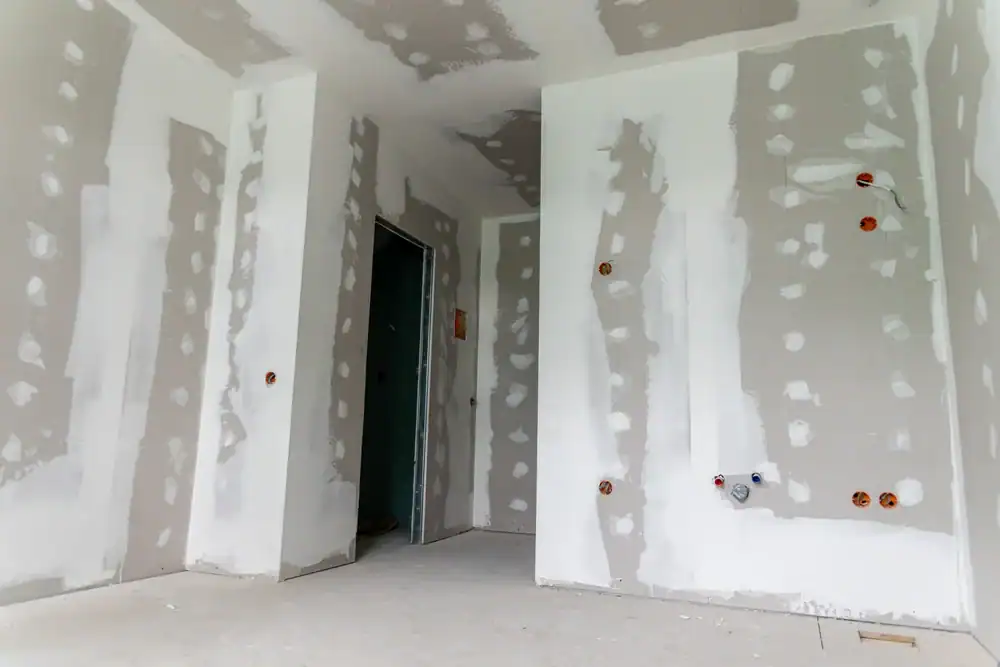
You get a complete repair, not just someone smearing drywall mud in a hole and calling it finished. That means proper surface prep, multiple coats of joint compound with adequate dry time between each one, sanding to create a smooth transition, and a clean work area when we’re done.
We use premium materials designed for the specific type of damage you’re dealing with. Water damage gets moisture-resistant compound. Large holes get proper backing and structural support. Cracks get addressed at the source so they don’t reappear in six months.
Frankford Valley homeowners typically spend between $150 and $800 on drywall patching, depending on the size and complexity of the repair. Most jobs get completed in a single day. Smaller patches often finish within a few hours once we account for dry time between coats.
You also get the finishing work – texture matching, priming, and paint – so the repair actually blends in. We don’t hand you a white patch and tell you to paint it yourself. The job isn’t done until you can’t tell where the damage was.
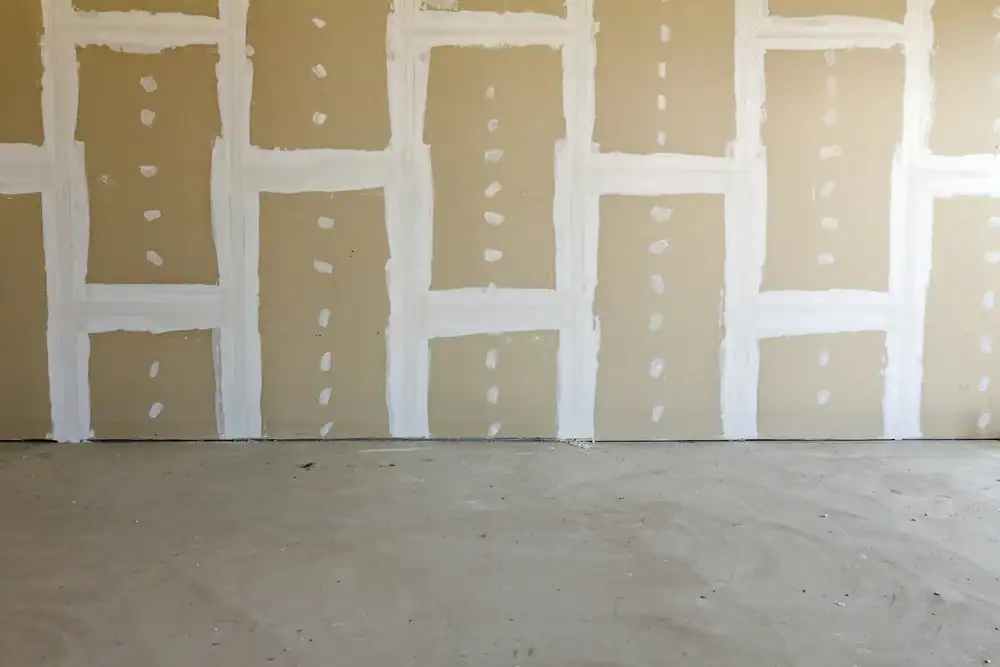
It depends on the type of joint compound, the thickness of the coat, humidity levels, and air circulation. Lightweight all-purpose compound usually dries in two to four hours for thin coats. Heavier coats or high humidity can push that to six hours or overnight.
Here’s what matters more than the clock: the compound needs to be completely dry before you add another layer. If it’s still cool to the touch or darker in color than the surrounding dried areas, it’s not ready. Adding a second coat too early traps moisture, which leads to cracking, shrinking, or a repair that fails within months.
Most professional drywall patching jobs in Frankford Valley, PA use at least two coats – sometimes three for larger repairs. We don’t rush the dry time because it compromises the quality of the repair. A patch that takes an extra day to cure properly will outlast a rushed job by years.
You’re seeing flashing, and it happens because drywall mud and joint compound absorb paint differently than the existing painted surface. Even if you use the exact same paint, the patch will have a different sheen – it usually looks flat or dull compared to the surrounding wall.
The fix is priming the repair before you paint. A good primer seals the porous surface of the dried compound and creates a consistent base for your finish coat. Without it, the patch sucks up paint at a different rate than the rest of the wall, and that difference shows up as soon as the paint dries.
This is one of the most common mistakes in DIY drywall patching. You do everything else right – good joint compound application, proper feathering, smooth finish – and then skip the primer to save fifteen minutes. The result is a repair that’s technically sound but visually obvious. We prime every patch separately before applying the final paint, which is why our repairs blend completely into Frankford Valley walls.
Yes, but it requires the right tools and some experience reading how texture was originally applied. Most Frankford Valley, PA homes have either knockdown, orange peel, or smooth finishes. Each one has a specific technique, and replicating it over a patch means understanding the original application method.
Knockdown texture gets sprayed on and then lightly flattened with a trowel. Orange peel is all about the spray pattern and distance from the wall. Smooth walls are actually the hardest – any imperfection shows up immediately, so the joint compound work has to be perfect before you even think about painting.
We bring texture samples when needed and test the pattern on scrap material before applying it to your wall. The goal is making the patch disappear completely, which means matching not just the color but also the surface texture. When it’s done right, you won’t be able to find the repair even if you’re looking for it. That’s the standard for professional drywall finishing, and it’s what separates a quality repair from a visible patch job.
Recurring cracks usually mean there’s movement in the structure – either the house is settling, there’s a moisture issue causing expansion and contraction, or the original drywall installation didn’t account for natural building movement. Patching the crack without addressing what’s causing it just buys you a few months before it reopens.
Common culprits in Frankford Valley homes include foundation settling, temperature fluctuations in attics or exterior walls, and improperly placed seams in the original drywall installation. Sometimes it’s as simple as missing tape at a joint, which allows the seam to flex and crack over time.
We inspect recurring cracks to determine the cause before we repair them. If it’s structural movement, we use flexible compound and mesh tape that can handle minor shifts. If it’s a moisture problem, we address the source first – fixing a crack without stopping the leak just means you’ll be calling us back in six months. Professional drywall patching in Frankford Valley, PA means solving the actual problem, not just covering up the symptom.
Most homeowners in Frankford Valley, PA spend between $150 and $800 depending on the size of the damage, how many repairs you need, and whether there’s underlying structural work required. Small holes from doorknobs or wall anchors typically run $150 to $300. Larger damage from water leaks or significant impact can reach $500 to $800 once you include any necessary framing repair and finishing work.
The price reflects materials, labor, and the time required for proper dry time between coats of joint compound. A quality repair isn’t fast – it requires multiple applications, adequate curing time, surface prep, priming, and paint matching. Trying to rush the process or skip steps might save money upfront, but you’ll pay for it later when the repair fails or looks obviously different from the surrounding wall.
We provide upfront estimates before starting work so you know exactly what you’re paying for. That includes the patching, finishing, texture matching, prime and paint, and cleanup. No surprises, no hidden fees for materials that should have been included from the start. You’re paying for a repair that lasts and looks professional, which is worth more than the cheapest quote you’ll find.
We handle both, but water damage requires a different approach than a simple hole repair. You can’t just patch over water-damaged drywall – you need to identify the moisture source, stop it, let everything dry completely, and then assess how much material needs replacing. Wet drywall loses its structural integrity and becomes a breeding ground for mold if you seal it up without addressing the moisture.
Most water damage in Frankford Valley homes comes from bathroom leaks, roof issues, or burst pipes. We cut out the damaged section, check the framing and insulation behind it, and make sure everything’s dry before installing new drywall. Then we use moisture-resistant joint compound for the finishing work, which helps prevent future issues if there’s any residual humidity.
The patching process itself is similar – multiple coats, proper dry time, feathering the edges, texture matching, and a complete prime and paint finish. But the prep work is more involved because cutting corners on water damage leads to bigger problems down the road. If you’re dealing with stains, soft spots, or visible moisture on your walls, that’s not a simple patch job – it’s a repair that needs to be done right the first time.
Other Services we provide in Frankford Valley