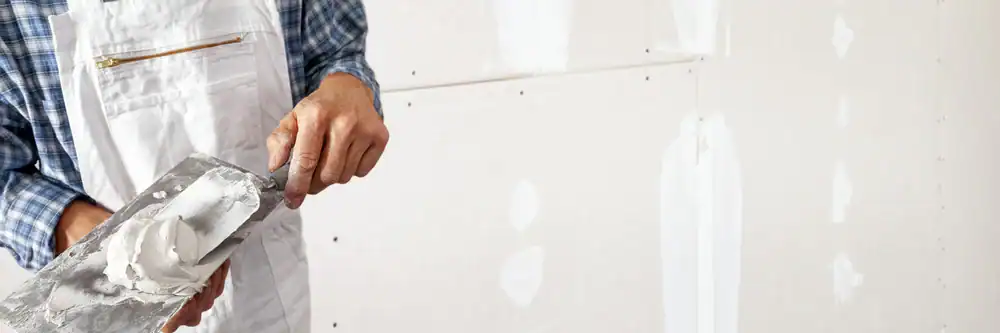
You’ve probably seen bad patches before. The kind where you can still see the outline through two coats of paint. Or the texture doesn’t match, so there’s a smooth spot surrounded by knockdown or orange peel. That’s what happens when someone skips steps or doesn’t know how to properly apply joint compound.
When we patch drywall in Society Hill, PA, the repair disappears. You won’t see lines, shadows, or uneven texture. We match what’s already on your wall—whether it’s smooth, skip trowel, or something more complex—and we feather the edges so there’s no ridge where old meets new.
Most jobs get finished the same day. That means the hole gets patched, the first coat goes on, dry time happens while we’re still there, the finishing coat gets applied, and we prime and paint before we leave. You’re not waiting days between coats or dealing with half-finished walls.
Sharpe Drywall exists because homeowners kept getting left with lumpy patches, missed appointments, and crews that didn’t clean up. We built this company to be the opposite—show up when we say we will, finish the job right, and leave your space cleaner than we found it.
We’ve been doing drywall work in Society Hill, PA and the surrounding Philadelphia area for over a decade. That matters here because most homes in Society Hill were built in the 1700s and 1800s, then restored in the 1950s. You’re not dealing with standard construction. You’ve got plaster walls, historic finishes, and materials that require someone who knows how old and new integrate.
We’re fully licensed and insured to work in Philadelphia, Delaware County, and Montgomery County. We live in these communities, and we treat your home the way we’d treat our own.
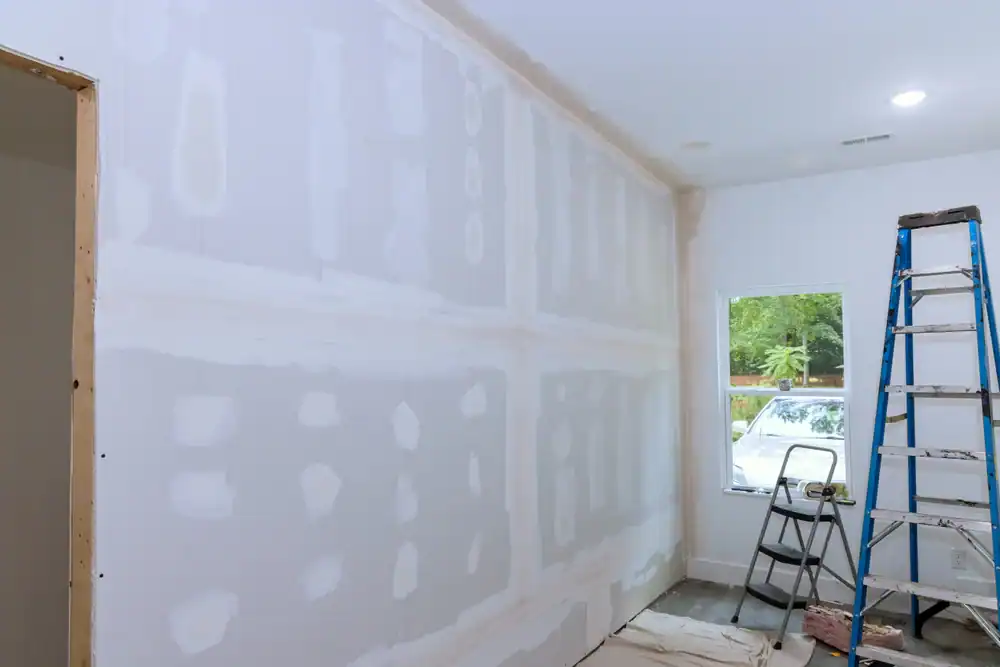
First, we assess the damage. If it’s water-related, we check for moisture and make sure the area is dry before we start. If the damaged section is too far gone, we cut it out clean and install a new piece of drywall using fiberglass mesh tape on the seams.
Then comes the joint compound. We apply the first coat using a setting-type compound that hardens chemically, not just by drying. This prevents cracks and gives us a solid base. We feather the edges out past the repair so there’s no visible line. Dry time depends on the product—some set in five minutes, others take longer—but we control that with dehumidifiers or heat guns if needed.
After the first coat is dry, we apply the finishing coat. This is where texture matching happens. If your wall has knockdown, orange peel, or skip trowel, we replicate it using the right tools and technique. If it’s smooth, we make it smooth.
Finally, we prime and paint. The primer seals the joint compound so it doesn’t show through your paint. Then we match your existing paint color and blend it so you can’t tell where the patch ends and the original wall begins. Before we leave, we clean everything—no drywall mud on your floors, no dust on your furniture.
Ready to get started?
Every drywall patching job in Society Hill, PA includes damage assessment, material removal if necessary, installation of new drywall or patch material, application of joint compound in multiple coats, texture matching, priming, and painting. We also include complete cleanup—covering your floors and furniture, containing dust, and removing all debris when we’re done.
We use premium materials. That means mold-resistant drywall if you’re dealing with water damage, professional-grade joint compound designed for durability, and fiberglass mesh tape that won’t crack or separate over time. In a neighborhood like Society Hill where 22% of properties face severe flooding risk over the next 30 years, using moisture-resistant materials isn’t optional—it’s necessary.
If your home has plaster walls, we know how to integrate new drywall with old plaster. Philadelphia homes—especially in Society Hill—were built long before sheetrock existed. Many have multiple layers where previous contractors added over existing surfaces instead of doing proper demo. We understand how to work with calcimine, oil-based paint, and different types of plaster so the repair holds and looks right.
You’re also getting someone who understands historic preservation. Society Hill has 18th and 19th-century row houses with original architectural details. We don’t just slap mud on a wall and call it done. We match textures, respect the character of your home, and make sure the repair fits the space.
Dry time depends on the type of joint compound we use and the conditions in your home. Setting-type compounds harden chemically in 5 to 90 minutes depending on the formula. These are what we use for the first coat because they don’t shrink and they’re ready for the next coat fast.
Air-drying compounds—the kind most DIYers grab at the hardware store—can take 24 hours or more between coats. That’s why amateur patches take days to finish. We use professional-grade materials that let us apply multiple coats in one visit.
Humidity and temperature affect dry time too. If your home is humid or cold, drying slows down. We bring dehumidifiers and heat guns to control the environment so we’re not waiting around. Most patches in Society Hill, PA get completed same-day because we manage the process from start to finish without leaving and coming back.
Yes. Texture matching is one of the most important parts of drywall patching in Society Hill, PA, and it’s where most contractors fail. If the texture doesn’t match, the repair is obvious no matter how well the joint compound was applied.
We replicate knockdown, orange peel, skip trowel, smooth finishes, and more complex patterns. Each texture requires different tools and techniques. Knockdown, for example, involves spraying or applying joint compound, letting it set slightly, then knocking it down with a trowel. Orange peel uses a specific spray gun setting. Smooth finishes require multiple thin coats and careful sanding.
If your home has historic plaster with a hand-troweled finish, we can match that too. It takes more time and skill, but we’ve been doing this for over a decade in older Philadelphia homes. We don’t move forward with priming and painting until the texture looks identical to the surrounding wall.
They’re the same thing. “Drywall mud” and “joint compound” are two terms for the material used to fill seams, cover fasteners, and smooth drywall surfaces. People use them interchangeably, but they mean the same product.
There are different types of joint compound, though. Setting-type (also called hot mud) hardens through a chemical reaction and comes in different setting times—5-minute, 20-minute, 45-minute, 90-minute. These are stronger, don’t shrink, and dry faster. We use these for the first coat on patches and repairs.
Air-drying compound (also called ready-mix or all-purpose) dries through evaporation. It’s easier to sand and work with for finishing coats, but it takes longer to dry and can shrink. We use this for the final coat when we’re feathering edges and perfecting texture.
When we’re patching drywall in Society Hill, PA, we choose the right type of joint compound based on what the job needs. First coats get setting-type for strength and speed. Finishing coats get air-drying compound for smooth, sandable results.
Water-damaged drywall has to be completely dry before we patch it. If we cover wet drywall, you’ll get mold, the joint compound won’t bond properly, and the repair will fail. The clock starts running as soon as water contacts drywall, so we move fast.
First, we assess how far the water spread. Sometimes the damage is obvious—discoloration, sagging, soft spots. Other times it’s hidden behind paint or inside the wall cavity. We check with moisture meters to see what’s wet and what’s salvageable.
If the drywall is soaked or structurally compromised, we cut it out and replace it. If it’s damp but intact, we dry it using dehumidifiers, fans, and heat. Once it’s dry, we check for mold. If there’s mold, we treat it before patching. Then we proceed with the repair using mold-resistant drywall and moisture-resistant joint compound.
In Society Hill, PA, where 22% of properties face severe flooding risk, water damage is common. Plumbing leaks, roof leaks, and aging infrastructure all contribute. We’ve handled hundreds of these repairs, and we know how to do it right so the problem doesn’t come back.
Yes. Priming and painting are included in every drywall patching job we do in Society Hill, PA. If we didn’t prime and paint, you’d see the patch through your wall color. Joint compound is porous and absorbs paint differently than drywall or plaster, so it shows up as a dull spot even after multiple coats.
We prime the patched area first using a high-quality primer that seals the joint compound. This creates a uniform surface so the paint goes on evenly. Then we match your existing wall color and apply enough coats to blend the repair into the surrounding area.
Color matching matters, especially in historic homes where paint might have aged or faded. We bring samples, test them on your wall, and adjust until it’s right. The goal is for you to not be able to find the patch once we’re done.
If your walls have a specific finish—flat, eggshell, satin—we match that too. Sheen affects how light reflects off the surface, and if it’s off, the patch will be visible from certain angles. We don’t leave until the repair disappears.
Feathering the edges is what makes a patch invisible. If you just fill the hole and stop at the edge, you create a ridge. That ridge shows through paint as a shadow or line, and everyone who walks past your wall will see it.
Feathering means spreading the joint compound out past the damaged area in thin, gradually tapering layers. The goal is to create a smooth transition from the patch to the original wall so there’s no visible edge. This requires applying the compound wider than the actual damage and using a taping knife to blend it out.
Most DIY patches fail because people don’t feather far enough or they apply the compound too thick at the edges. When it dries, you can see exactly where the patch starts and stops. Professional drywall patching in Society Hill, PA involves feathering 6 to 12 inches past the repair depending on the size, then sanding it smooth so the transition is seamless.
We also feather in multiple directions and check the surface from different angles with a work light. Light reveals imperfections that you can’t see straight-on. If there’s a ridge, bump, or uneven spot, we fix it before priming and painting. That’s the difference between a patch that disappears and one that’s obvious every time you look at your wall.
Other Services we provide in Society Hill