
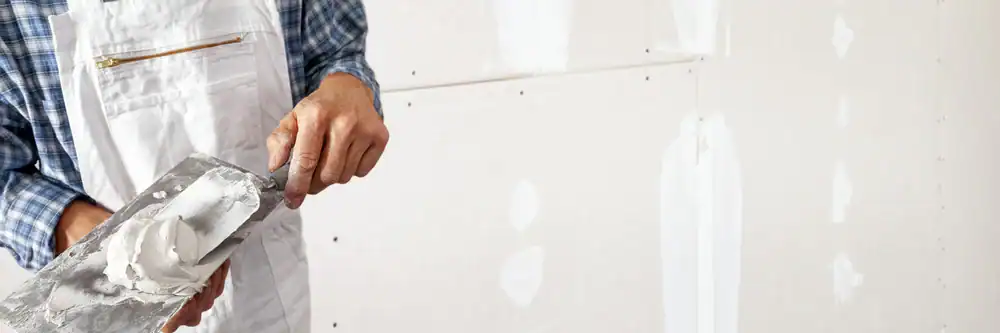
Most drywall patching in Hunting Park wraps up in a single day. Small holes take a few hours. Larger repairs might need a second visit for finishing, but you’re not waiting weeks to use your room again.
The difference shows up when you prime and paint. If the patch job was done right, you won’t see ridges, bumps, or shadows through the paint. The wall looks flat and smooth because we feather the edges properly and match your existing texture.
You’re not dealing with dust piles in the hallway or drywall mud tracked through your house. We clean as we go and vacuum before we leave. Your furniture stays covered, your floors stay protected, and you’re not spending your weekend cleaning up after us.
We work throughout Montgomery and Bucks County, and we’ve spent plenty of time in Hunting Park’s rowhomes. Most of these houses went up between the 1940s and 1960s, and they weren’t built the same way newer homes are.
You’ve got plaster walls in some rooms, drywall in others. You’ve got settling and movement from decades of freeze-thaw cycles. You’ve got moisture issues that show up in basements and exterior walls. We’ve seen it all, and we know how to fix it without creating new problems.
We’re locally owned, fully licensed and insured. When you call, you’re talking to someone who actually does the work—not a call center.
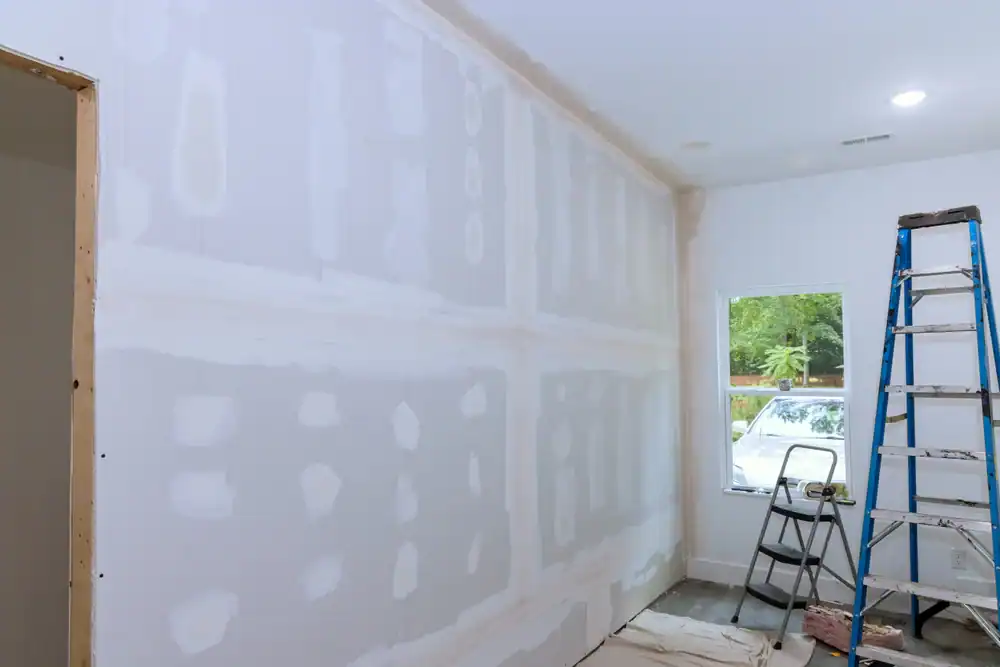
We start by cutting out any damaged drywall and checking what’s behind it. If there’s water damage or mold, we need to know before we patch anything. Once the area is clean and dry, we cut a new piece of drywall to fit and secure it to the studs or backing board.
The first coat of joint compound goes on to cover the seams and screw heads. After that dries—usually 24 hours depending on humidity—we apply a second coat and feather the edges so the repair blends into the surrounding wall. If your wall has texture, we match it before the final dry time.
Once everything’s cured, we sand it smooth and clean up the dust. Then we prime the patched area so it’s ready for paint. If you want us to handle the painting too, we can do that. Otherwise, you’re good to go with a surface that’s prepped and ready.
Ready to get started?
You’re getting mold-resistant drywall and professional-grade joint compound. We’re not using the cheap stuff from the hardware store that cracks after six months. The materials we use are designed to handle Hunting Park’s humidity and temperature swings.
We bring our own drop cloths, plastic sheeting, and vacuum equipment. Your floors and furniture stay protected throughout the job. All debris goes with us when we leave—you’re not stuck with chunks of old drywall sitting in your trash can for weeks.
If your repair involves matching existing texture, that’s part of the job. Knockdown, orange peel, skip trowel—whatever’s on your walls, we replicate it. The goal is for the patch to disappear once it’s painted, and that only happens when the texture matches perfectly.
For older Hunting Park homes built before 1978, we follow lead-safe work practices. That means containing dust, using HEPA vacuums, and cleaning thoroughly. It takes a little longer, but it keeps your family safe.
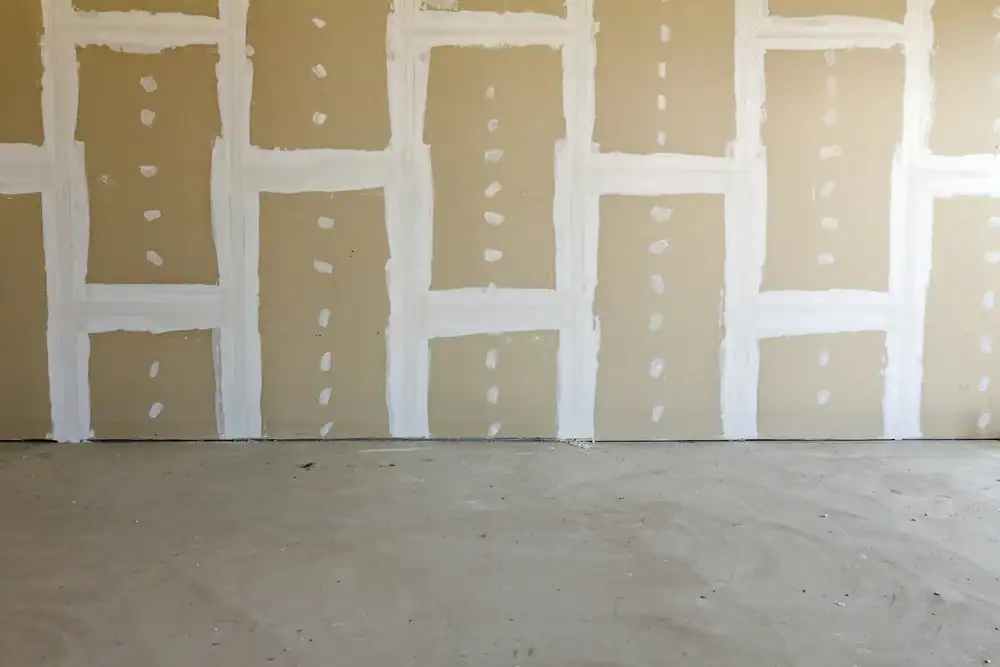
Dry time for drywall mud depends on the temperature and humidity in your house. In a typical Hunting Park home, the first coat of joint compound takes about 24 hours to dry completely. The second coat needs another 24 hours.
If your house runs cold or you’re doing the repair in a damp basement, add extra time. Rushing it causes problems—the mud shrinks as it dries, and if you paint too early, you’ll see the patch through the finish coat.
We don’t guess. We check that each coat is fully cured before moving to the next step. That’s how you get a repair that actually lasts.
Yes, but it takes more work than patching standard drywall. A lot of Hunting Park rowhomes still have original plaster walls with textures that aren’t made anymore. We can replicate most textures using the right tools and techniques.
For smooth plaster, we skim coat the patch and sand it flush. For textured plaster, we use trowels, brushes, or sponges to recreate the pattern. It’s not something you can fake—you need to know what you’re looking at and how it was originally applied.
If the existing plaster is in bad shape, sometimes patching isn’t the best option. We’ll tell you if a full skim coat or replacement makes more sense for the long term.
Water is the biggest culprit. Leaking roofs, old plumbing, and condensation from poor ventilation all destroy drywall. In Hunting Park’s rowhomes, shared walls and flat roofs create extra risk for water intrusion.
Foundation movement is another common issue. These houses have been settling for 60-plus years, and that causes cracks in walls and ceilings. Seasonal temperature changes make it worse—the freeze-thaw cycle expands and contracts materials, which stresses the drywall.
Then there’s normal wear and tear. Doorknobs, furniture, kids, pets—all of it adds up. The good news is most of this damage is easy to fix if you catch it before water gets behind the wall.
Move small stuff out of the way, but we can work around larger furniture. We’ll need access to the damaged wall, so anything directly against it should be pulled out a few feet.
We bring drop cloths and plastic sheeting to protect whatever stays in the room. Drywall dust gets everywhere if you’re not careful, so we cover floors, furniture, and doorways. After sanding, we vacuum with a HEPA filter to catch the fine particles.
If you’re dealing with a big repair—like an entire wall—it’s easier to clear the room completely. For small patches, you don’t need to empty the whole space. Just give us enough room to work and we’ll handle the rest.
Small repairs—nail holes, doorknob dents, minor cracks—usually run $150 to $250. Medium repairs like fist-sized holes or water-damaged sections cost $250 to $400. Large repairs involving multiple walls or ceiling damage can go higher depending on the scope.
The price depends on how much drywall we’re replacing, how many coats of joint compound the job needs, and whether we’re matching texture or dealing with lead-safe work practices in older homes.
We give you a clear estimate before starting any work. No surprises, no hidden fees. You know what you’re paying and what you’re getting before we touch your walls.
If it’s a tiny nail hole and you’re comfortable with spackle, go for it. Anything bigger than a quarter, and you’re better off calling someone who does this every day.
The problem with DIY drywall patching is that it looks easy until you’re halfway through. Feathering the edges takes practice. Matching texture is harder than it looks. And if you don’t prep the surface correctly, the patch will crack or show through the paint.
We’ve fixed plenty of DIY jobs that went sideways. You end up spending money on materials, tools, and time—then paying us to redo it anyway. If the wall matters to you, start with a pro and save yourself the headache.
Other Services we provide in Hunting Park