You’re staring at a hole in your wall from a doorknob, a crack from settling, or water damage that’s been patched three times already. Every time you walk past it, you notice it. Every time guests come over, you see them notice it too.
That’s the difference between a patch job and professional drywall patching. The repair shouldn’t announce itself every time you turn on a light or walk down the hallway.
We match your existing texture—whether it’s knockdown, orange peel, or smooth—so the repair blends completely. You get walls that look untouched, not walls that look fixed. Most jobs in Hulmeville wrap up in a single visit, and we’re not leaving dust trails through your house or half-finished work that drags on for weeks.
The patch disappears. The problem stays solved. That’s what you’re paying for.
Sharpe Drywall has been handling sheetrock patching and repair across Bucks County for more than ten years. We’re locally owned, fully licensed and insured, and we’ve seen every type of drywall damage Hulmeville homes throw at us.
Homes here deal with foundation settling, older plumbing that springs leaks, and seasonal temperature swings that crack drywall over time. We know what causes the damage and how to fix it so it doesn’t come back.
You’re not getting a crew that shows up once and ghosts you. You’re getting contractors who live in the area, understand Pennsylvania construction, and treat your home the way we’d treat our own.
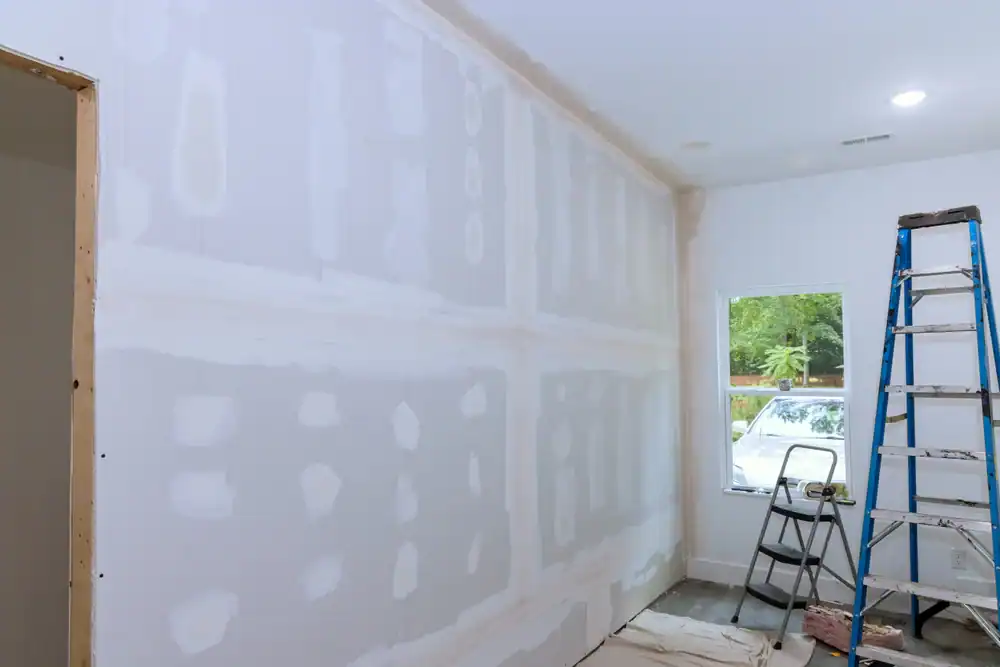
First, we assess the damage. Small nail holes get filled and sanded smooth in one pass. Larger holes or water-damaged sections get cut out, backing installed, and new drywall fitted precisely to match the opening.
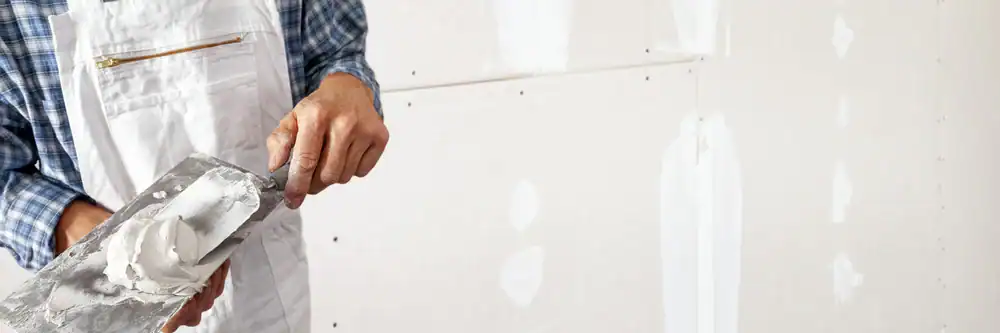
Once the patch is secured, we apply joint compound in layers, feathering the edges so there’s no ridge or visible seam. Each layer dries completely before the next goes on—rushing this step is what causes those obvious repair lines you see in bad patch jobs.
After sanding, we match your wall’s existing texture. If you’ve got knockdown texture, we recreate that exact pattern. Orange peel, skip trowel, smooth finish—whatever’s on your walls, we replicate it so the patch disappears into the surrounding surface.
Finally, we prime the repair so it’s ready for paint. If you’re handling the painting yourself, the surface is prepped and ready to go. If you want us to finish it, we match your paint and complete the job so you can’t tell where the damage was.
We cover your floors and furniture, contain the dust, and clean up completely before we leave. You’re not living in a construction zone or dealing with drywall mud tracked through your house.
Ready to get started?
You’re getting premium materials designed for durability—mold-resistant drywall for areas prone to moisture, professional-grade joint compound that doesn’t crack or shrink, and proper backing that supports the repair long-term.
Texture matching is included in every job. We don’t slap mud on the wall and call it done. We recreate your existing finish so the repair blends completely, whether that’s a light orange peel common in newer Hulmeville homes or the heavier knockdown texture you’ll find in older properties.
Complete cleanup is standard, not an add-on. We’re covering your floors, containing dust with professional equipment, and leaving your home the way we found it—minus the damaged drywall.
The cost of drywall patching in Hulmeville typically runs between $150 and $800 depending on the size and complexity of the damage. Small patches—nail holes, minor dings—usually fall on the lower end. Larger repairs involving water damage, multiple holes, or ceiling work cost more because they require more material, time, and precision.
You’ll get a clear estimate upfront that covers materials, labor, texture matching, and cleanup. No surprise charges when the job’s done. The price we quote is the price you pay.
Small drywall patch repair cost in Hulmeville typically ranges from $150 to $300 for minor damage like nail holes, small dings, or doorknob impacts. That price covers the repair, texture matching, and cleanup—not just filling the hole and walking away.
If you’re dealing with multiple small holes in the same room, the cost doesn’t multiply by the number of patches. We price by the overall scope of work rather than charging per hole, so fixing five nail holes in one bedroom costs about the same as fixing two.
The price goes up when the damage is larger, involves structural concerns, or requires more extensive prep work. But for standard small patches—the kind most Hulmeville homeowners need—you’re looking at a few hundred dollars for professional results that actually last.
Most drywall patching jobs in Hulmeville are completed in a single visit, typically within a few hours for small to medium repairs. Larger jobs involving extensive water damage, multiple rooms, or ceiling repairs might take a full day, but you’re rarely looking at multi-day projects for standard patching work.
The timeline depends on how many layers of joint compound the repair needs and how long each layer takes to dry. Small patches can be finished, textured, and primed in one visit. Larger repairs might need a second visit to apply final coats and match texture once everything’s fully cured.
We’re not the kind of contractor who starts your job, disappears for a week, then shows up to finish. When we schedule your repair, we block out enough time to complete the work properly without dragging it out or rushing through steps that need attention.
Yes, and that’s the part that separates professional drywall patching from amateur work. Matching existing texture—whether it’s knockdown, orange peel, skip trowel, or smooth—is what makes a repair invisible instead of obvious.
We bring the tools and materials needed to recreate your specific finish. For knockdown texture, we spray the compound and knock it down at the right timing to match the surrounding pattern. Orange peel gets sprayed at the correct pressure and distance to replicate the existing stipple. Smooth finishes require multiple coats and careful sanding to blend seamlessly.
Hulmeville homes have a mix of textures depending on when they were built and who did the original work. We’ve matched them all. The goal isn’t just to fill the hole—it’s to make the repair disappear so you can’t tell where the damage was, even when the light hits it at an angle.
Drywall cracks in Hulmeville typically come from foundation settling, temperature fluctuations, or structural movement—all common in Pennsylvania homes, especially older ones. Seasonal changes cause the house to expand and contract, which stresses drywall joints and creates hairline cracks or larger splits along seams.
Fixing cracks properly means addressing what’s causing them, not just covering them up. If it’s a hairline crack from normal settling, we open it slightly, fill it with compound, tape it if needed, and refinish the surface. If it’s a recurring crack caused by ongoing movement, we use mesh tape and flexible compound that can handle minor shifts without cracking again.
Ceiling cracks are especially common in Hulmeville homes because of how attics heat up in summer and cool down in winter. We see these all the time, and the fix involves reinforcing the joint, re-taping if necessary, and finishing it so it blends with the surrounding ceiling texture. A proper repair holds up long-term instead of reappearing six months later.
We handle both, and water damage is one of the most common reasons Hulmeville homeowners call us. Leaking roofs, burst pipes, and condensation issues all cause drywall to deteriorate, and fixing it correctly means more than just patching the surface.
Water-damaged drywall needs to be cut out and replaced, not just covered over. If the drywall is soft, stained, or showing signs of mold, it’s compromised and won’t hold a repair. We remove the damaged section, check for mold or structural issues behind it, and install new moisture-resistant drywall that’s designed to handle the conditions that caused the problem in the first place.
Once the new drywall is in, we finish it to match your existing walls—taping, mudding, sanding, and texturing so the repair blends completely. If the water damage affected insulation or framing, we’ll let you know so you can address those issues before we close everything up. You don’t want to patch over a problem that’s going to come back.
DIY drywall patches crack because the repair wasn’t done in layers, the compound dried too fast, or the patch isn’t properly supported behind the surface. Most homeowners grab spackle or lightweight compound, fill the hole in one pass, and expect it to hold—but that’s not how drywall repair works.
Joint compound shrinks as it dries. If you apply it too thick in one layer, it pulls away from the edges and cracks down the middle. Professional drywall patching involves multiple thin coats, each one drying completely before the next goes on, so the repair cures evenly without shrinking or cracking.
The other common issue is lack of backing. If you’re patching a hole larger than a couple inches, the compound needs something solid behind it to grip onto. Without proper backing—a drywall patch, mesh, or backer board—the repair flexes when you bump it or when the house settles, and it cracks. We install backing on every repair that needs it so the patch stays solid long-term.
Other Services we provide in Hulmeville