
You’re not looking at another weekend project that ends with a lumpy patch and three trips to the hardware store. You want the hole gone, the texture matched, and your wall looking like nothing ever happened.
That’s what proper drywall patching in Girard Estate delivers. The damage disappears completely—no visible lines, no shadows through the paint, no reminder that there was ever a problem. When the first coat of joint compound goes on correctly and the edges get feathered right, the repair blends into your existing wall.
Your rowhouse has character that matters. Many homes here were built before 1940, and the wall surfaces aren’t always standard. Getting drywall finishing in Girard Estate right means understanding how to match textures that might be 80 years old. When it’s done correctly, you move on with your day. When it’s done wrong, you’re stuck looking at that patch every time you walk past.
We serve Montgomery and Bucks County homeowners who want drywall work done right the first time. We’re locally owned, fully licensed and insured, and we’ve spent over a decade working in neighborhoods exactly like Girard Estate.
We know what it’s like working in attached homes where 87% of residences share walls. We understand the plaster styles and construction methods common in pre-1940s Philadelphia rowhouses. That knowledge matters when you’re trying to match existing finishes or repair walls that weren’t built with modern drywall.
You get transparent pricing before we start, complete cleanup when we’re done, and repairs that actually last. No surprises, no mess left behind, no wondering if we’ll show up when we say we will.
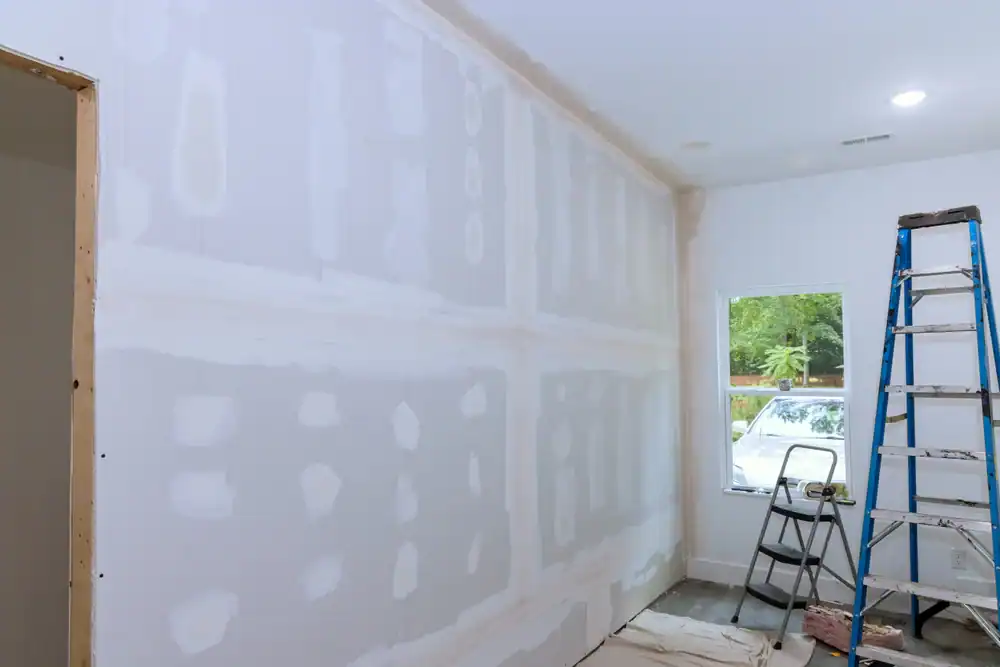
We start by assessing the damage and the surrounding wall texture. If there’s water damage, we check for mold and make sure the area is completely dry before any drywall mud goes on. Rushing this step is how problems come back later.
Next comes cutting out the damaged section cleanly and installing a patch that sits flush with your existing wall. This is where experience with older homes matters—backing and support methods vary depending on what’s behind your walls. We use premium mold-resistant drywall and secure everything properly so the patch doesn’t crack or sag over time.
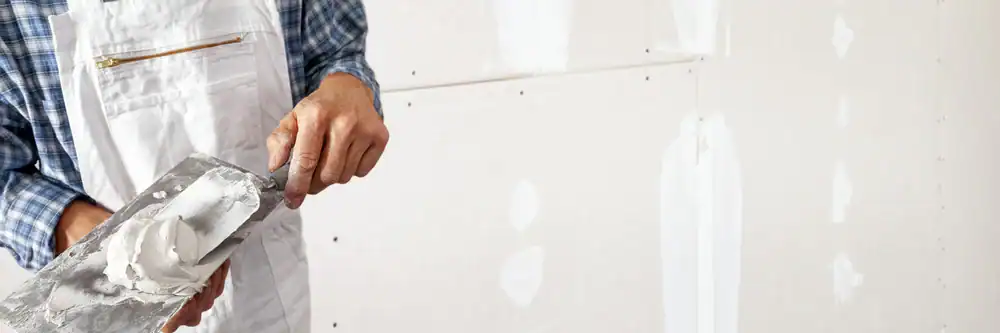
Then we apply joint compound in stages. The first coat fills the gaps and covers the seams. After proper dry time, we feather the edges so the repair blends into your wall without ridges or bumps. Additional coats get sanded smooth between applications. The finishing work is what separates invisible repairs from obvious patches.
Finally, we prime and paint to match your existing wall color. We bring the paint, handle the color matching, and make sure the sheen matches what’s already there. You’re left with a wall that looks untouched.
Ready to get started?
Every drywall patching job in Girard Estate includes damage assessment, complete material supply, professional installation, multi-coat finishing, texture matching, priming, painting, and full cleanup. You don’t coordinate multiple contractors or make supply runs—we handle it all.
The texture matching matters more here than in newer neighborhoods. Your home might have skip trowel, knockdown, or smooth finishes that require specific tools and techniques to replicate. We don’t guess at it. We test the pattern, match it precisely, and make sure the repaired section looks identical to the surrounding wall.
Girard Estate’s housing market has seen home prices climb 8.9% in the past year, with the median now at $283K. Homeowners here maintain their properties, and visible wall damage affects both your daily enjoyment and your home’s value. Professional drywall repair protects that investment without the headache of managing it yourself.
Most repairs get completed in one visit. Small holes and patches typically take 1-2 hours from start to finish. Larger jobs might need a second visit after dry time for final sanding and paint. Either way, you’re not dealing with an extended project that disrupts your space for days.
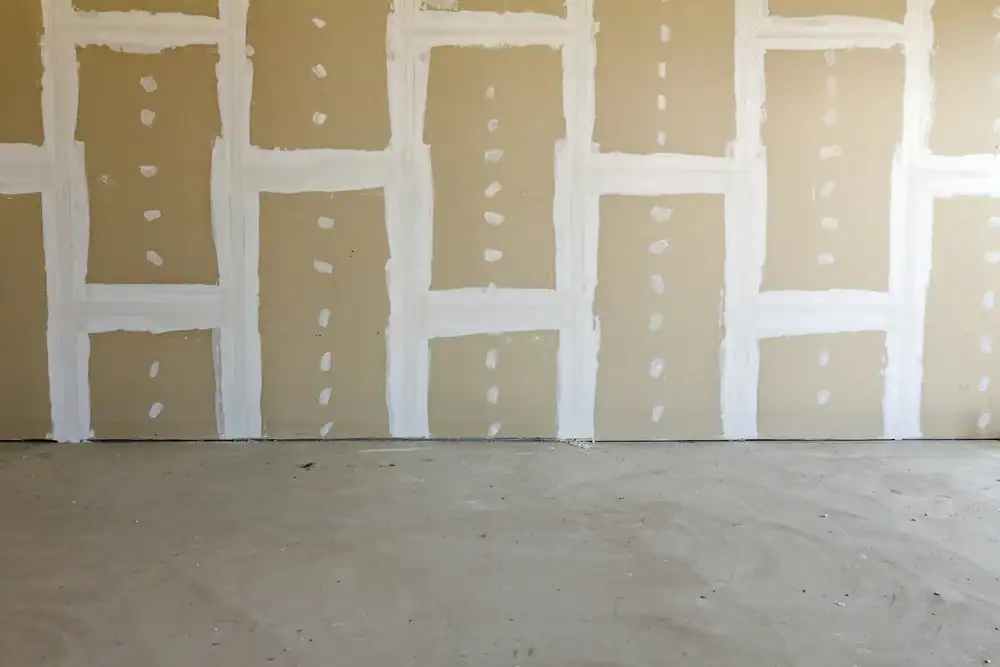
Dry time for joint compound typically runs 12-24 hours between coats, but humidity and temperature affect the timeline. Girard Estate’s older rowhouses sometimes have less air circulation than newer homes, which can extend drying time slightly.
We don’t rush it. Applying the next coat before the previous one is fully dry causes cracking, shrinking, and repairs that fail within months. Most small patches need 2-3 coats total, so you’re looking at 24-48 hours from start to final sanding if we’re doing it right.
If you need the repair done faster, we can use hot mud (setting-type joint compound) that hardens chemically rather than through evaporation. It sets in 20-90 minutes depending on the formula. We use this for time-sensitive repairs, but standard drying compound gives a smoother finish for most applications.
Feathering the edges means gradually thinning out the joint compound as you move away from the repair, creating a seamless transition between the patch and your existing wall. Without this step, you get a visible ridge or bump where the new compound meets the old surface.
We spread each coat of drywall mud wider than the previous one, using light pressure on the outer edges to blend it into the surrounding area. The first coat might cover 6 inches beyond the patch. The second coat extends 8-10 inches. By the final coat, we’re working 12-15 inches out from the original damage.
This technique is especially important in Girard Estate homes where lighting can highlight imperfections. Natural light coming through rowhouse windows hits walls at specific angles, and poor feathering shows up immediately. Done correctly, you can run your hand over the repair and feel nothing but smooth, continuous wall.
Yes, but it requires different tools and techniques than standard drywall finishing in Girard Estate. Many pre-1940s homes here have plaster walls with hand-troweled textures, skip trowel patterns, or smooth finishes that you can’t replicate with a roller.
We assess your existing texture first. For skip trowel or knockdown finishes, we use specific trowel techniques and joint compound consistency to recreate the pattern. For smooth plaster walls, we apply multiple thin coats and sand meticulously between each one—any imperfection shows on a smooth finish.
Historic plaster walls also move differently than modern drywall. They’re harder, more brittle, and attached to wood lath rather than studs. When we patch these walls, we sometimes need to use plaster washers or different backing methods to prevent future cracking. The repair method depends on what we find behind your wall, but the goal stays the same: invisible results that last.
Simple patches typically run $150-$400 for small holes that take 1-2 hours to complete. Most residential drywall repair in Girard Estate falls in the $300-$800 range depending on damage size, texture complexity, and whether we’re dealing with drywall or plaster.
Your quote depends on what we’re actually fixing. A doorknob hole in standard drywall with basic texture costs less than repairing water damage that requires mold treatment and plaster texture matching. We give you the exact price upfront after assessing the damage—no surprise fees when the job’s done.
Rowhouse living sometimes means shared-wall damage from neighbors, settlement cracks from older foundations, or plaster failure from decades of temperature changes. These repairs vary more in cost because the underlying cause matters. We explain what needs fixing, why it needs fixing, and what it costs before we start. You decide if the price makes sense for your situation.
You can handle the painting yourself, but most homeowners in Girard Estate prefer we do it because color and sheen matching is harder than it looks. We include priming and painting in our service specifically because it’s the final step that makes repairs truly invisible.
Bare joint compound is porous and absorbs paint differently than your existing wall. Without proper priming, the patched area shows through as a dull spot even when you use the same paint color. We use stain-blocking primer that seals the compound and creates a uniform surface for paint.
Then comes color matching. Even if you have leftover paint from the original job, it’s often faded or aged differently than what’s in the can. We match the color and sheen to what’s currently on your wall, not what it looked like five years ago. That attention to detail is what separates repairs that disappear from repairs that announce themselves every time you look at the wall.
Most repairs get scheduled within a few days of your call, and we complete the majority in one visit. If you’re dealing with water damage or urgent repairs, we prioritize those because the clock starts running as soon as drywall gets wet.
Our schedule depends on current workload, but we don’t book out weeks in advance like some contractors. We’re local, we’re responsive, and we understand that holes in your wall aren’t something you want to live with longer than necessary. When you call, we give you a realistic timeline—not a vague “we’ll get back to you.”
Emergency repairs get handled faster. If a pipe burst and you’ve got soaked drywall that needs immediate attention to prevent mold, we work that into our schedule as quickly as possible. For standard patches and non-urgent repairs, you’re typically looking at 3-5 days from initial contact to completed work, including dry time between coats.
Other Services we provide in Girard Estate