
You shouldn’t be able to tell where the damage was. That’s the standard.
Most drywall patching in Eastwick, PA fails because contractors rush the finishing or don’t understand how older homes behave. Homes built in the 1950s and 60s settle differently than new construction. They shift with the seasons, especially in low-lying areas where moisture moves through foundations. A patch that looks fine in July can telegraph through paint by October if the joint compound wasn’t feathered properly or given enough dry time between coats.
You get texture matching that actually matches. Whether it’s knockdown, orange peel, or smooth finish, we recreate the pattern so there’s no visible line between old and new. The first coat gets proper dry time. Each layer is feathered at the edges so transitions disappear. Then we prime and paint to match your existing wall.
The result is a repair you can’t find even when you’re looking for it. No shadows, no bumps, no different sheen when light hits it. Just a wall that looks like nothing ever happened.
Sharpe Drywall has been handling drywall patching in Eastwick, PA and throughout Southwest Philadelphia for years. We’re locally owned, which means we’re not disappearing after the job. You’ll see our trucks in the neighborhood because this is our market.
We know what Eastwick homes deal with. Flooding concerns near the airport. Settling in older rowhomes. Cracks that reappear because the foundation shifts. We’ve patched walls after water damage, fixed ceiling cracks from structural movement, and repaired everything from doorknob holes to full-panel replacements.
You’re working with licensed and insured contractors who show up on time, finish the same day for most repairs, and clean up completely before we leave. No drywall mud on your floors, no dust on your furniture, no half-done jobs waiting for a callback that never comes.
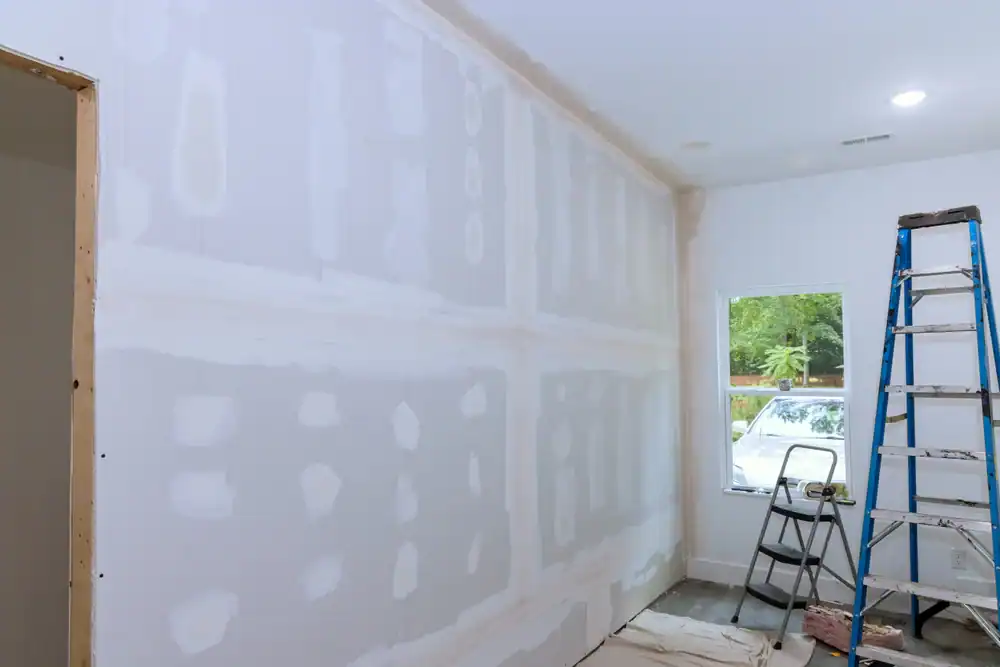
We start by assessing the damage and the wall texture. If there’s water damage, we check for mold or soft drywall that needs cutting out. Any compromised material gets removed back to solid board.
For holes, we install a backer or use a patch kit depending on size. Larger repairs might need a new piece of drywall cut to fit. We secure everything so it’s flush with the existing wall—no high spots, no low spots.
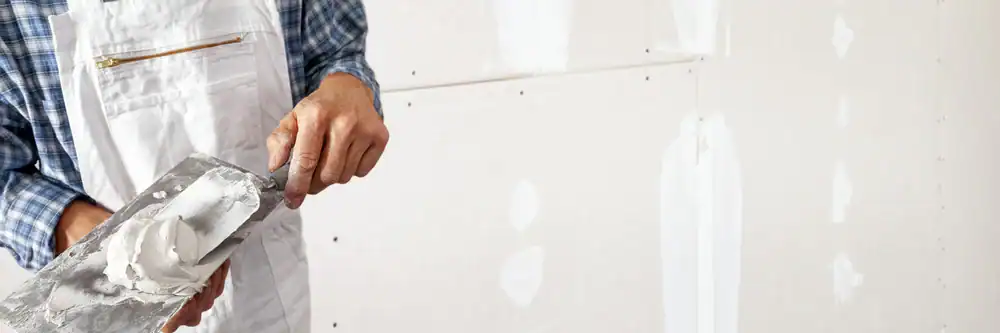
Then comes the joint compound. The first coat fills the repair and covers seams or fasteners. After proper dry time, we apply a second coat and feather the edges outward so the repair blends into the surrounding wall. Some repairs need a third coat for a completely smooth finish.
Once the drywall mud is fully dry, we sand it smooth and recreate your wall texture. Knockdown gets knocked down. Orange peel gets sprayed to match the existing pattern. Smooth walls stay smooth. We prime the patched area to seal it, then paint to match your wall color.
Most drywall patching in Eastwick, PA is done in one day. You’re not waiting a week for multiple visits. We finish it, clean it up, and you’re back to normal.
Ready to get started?
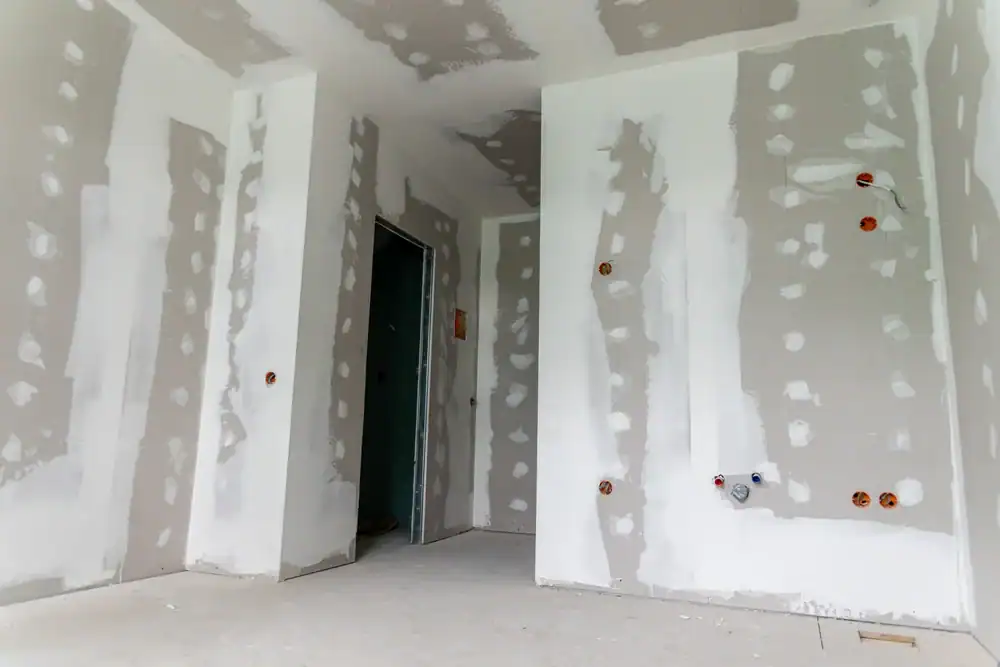
Every drywall patching job in Eastwick, PA includes damage assessment, material removal if needed, proper backing installation, and multiple coats of joint compound with full dry time between layers. We’re not rushing the process to get to the next job.
You get texture matching using the same techniques and tools that created your original finish. We carry the equipment to replicate knockdown, orange peel, skip trowel, and other common textures found in Eastwick homes. The goal is making the repair invisible.
We also include priming and painting of the patched area. The primer seals the new drywall mud so paint absorbs evenly. Then we match your existing wall color and apply enough coats to eliminate any sheen difference. If your walls have aged or faded, we’ll let you know so there are no surprises.
Complete cleanup is part of the service. Drywall work creates dust and debris. We contain it during the job and remove everything when we’re done. Drop cloths protect your floors. Vacuum and wipe-down get rid of the fine dust that settles everywhere.
Eastwick’s older homes often have plaster walls mixed with drywall from renovations over the decades. We work with both. We also understand the moisture issues that come with living in one of Philadelphia’s lowest-lying neighborhoods. If your repair needs mold-resistant drywall or special prep work because of recurring water problems, we’ll tell you upfront and price it clearly.
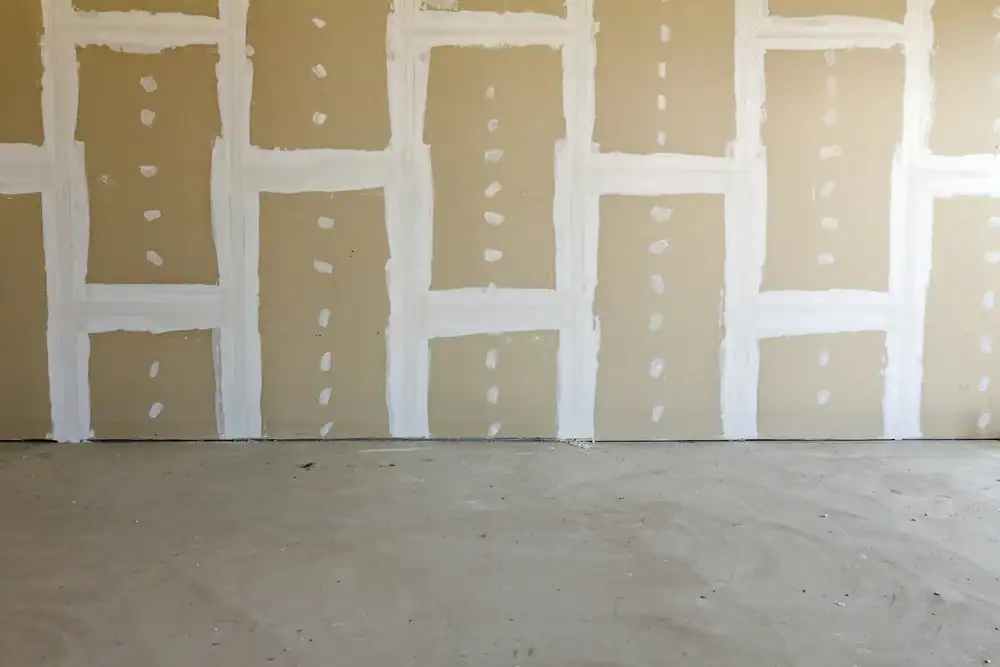
Most drywall patching in Eastwick, PA is finished the same day. Small holes and cracks usually take a few hours from start to cleanup. Larger repairs might take a full day depending on how many coats of joint compound are needed and the dry time between layers.
The actual work time isn’t what extends the job—it’s the dry time. Joint compound needs to dry completely before you can apply the next coat or sand it smooth. We don’t rush this. Wet sanding or applying a second coat too early causes problems that show up later.
If your repair involves water damage or mold remediation, that adds time. We need to cut out damaged material, treat the area if necessary, and make sure everything is dry before patching. But you’ll know the timeline before we start. We’re not showing up, doing half the job, and telling you we’ll be back next week.
Not if the work is done right. The key is feathering the edges of the joint compound so there’s no ridge where the patch meets the existing wall. Most visible repairs happen because someone applied drywall mud in a small area and didn’t blend it outward.
We feather each coat wider than the last, creating a gradual transition that disappears under paint. Then we recreate your wall texture exactly. If you have knockdown texture, we knock it down to match the pattern and height of the surrounding area. Orange peel gets sprayed at the same density. Smooth walls get sanded completely flat.
Priming is just as important. Unprimed joint compound absorbs paint differently than sealed drywall, which creates a dull spot even if the surface is smooth. We prime every repair so the paint goes on evenly. If your walls have aged or the color has faded over time, we’ll color-match as closely as possible, but you might see a slight difference until the whole wall gets repainted. That’s not a defect in the repair—it’s just how paint ages. We’ll tell you if that’s likely before we start.
Yes, but fixing them permanently means understanding why they’re happening. Cracks that reappear in the same spot are usually caused by structural movement—foundation settling, seasonal expansion and contraction, or stress points where walls meet ceilings.
Eastwick homes built in the 1950s and 60s have had decades to settle. Most of that movement is done, but you still get minor shifting, especially in low-lying areas where soil moisture changes throughout the year. A standard drywall patching approach will fill the crack, but it’ll reopen when the house moves again.
For recurring cracks, we use flexible joint compound and mesh tape that can handle minor movement without cracking. In some cases, we’ll recommend a slightly different finishing technique that builds in flexibility. If the crack is caused by a structural issue—like a sagging ceiling joist or a foundation problem—we’ll tell you. Patching over a structural issue is a waste of your money. We’d rather be honest about what you’re dealing with so you can decide whether to address the underlying cause or just plan on occasional touch-ups.
Mostly the finishing. Anyone can slap joint compound in a hole. Getting it smooth, invisible, and properly textured takes specific tools, materials, and years of practice.
Handymen often use too much drywall mud, don’t feather the edges wide enough, or skip coats to save time. The repair looks fine until it dries and you see ridges, shadows, or a texture that doesn’t match. Some will tell you it’ll look better after paint. It won’t.
We carry texture guns, knockdown knives, taping tools, and the right grades of joint compound for each coat. The first coat is for filling and adhesion. The second coat is for smoothing and extending the feathered edge. The third coat, when needed, creates a finish ready for texture and paint. Each layer has a purpose, and skipping steps shows up in the final result.
You’re also working with licensed and insured contractors. If something goes wrong—we damage a pipe behind the wall, someone gets hurt, anything unexpected—you’re covered. A handyman working as a sole proprietor might not carry that protection. For a small patch, maybe that’s a risk you’re willing to take. For larger repairs or anything involving water damage, it’s worth hiring someone who does this full-time.
Yes. Water damage is common in Eastwick because of the flooding risk and the age of the housing stock. We’ve repaired ceilings after roof leaks, walls after pipe bursts, and basement drywall after groundwater intrusion.
The first step is making sure the area is completely dry. Patching over damp drywall traps moisture and leads to mold. If the drywall is soft, stained, or shows any signs of mold growth, we cut it out back to the studs. We don’t patch over compromised material.
For areas prone to moisture—like basement walls or bathrooms—we use mold-resistant drywall and moisture-resistant joint compound. It costs a bit more than standard materials, but it’s the right way to handle repairs in high-risk areas. Regular drywall will just fail again when the next water event happens.
We also check for underlying issues. If your ceiling has water stains, we want to know if the roof leak is fixed before we patch the ceiling. If your basement wall keeps getting wet, we’ll ask about drainage and waterproofing. We’re not plumbers or roofers, but we’re not patching walls that are going to get damaged again next month. You’ll get an honest assessment of whether the repair will hold or if you need to address something else first.
Small repairs—nail holes, doorknob dings, minor cracks—usually run a couple hundred dollars depending on how many there are and whether they need texture matching and paint. Larger holes or water damage repairs cost more because they require more material, labor, and dry time.
The price depends on the size of the damage, how many coats of joint compound are needed, the complexity of your wall texture, and whether we’re priming and painting. A smooth ceiling repair is faster than recreating a heavy knockdown texture. A single hole is cheaper than patching six different spots around your house.
We give you a fixed price before we start. You’ll know exactly what the repair costs, what’s included, and how long it’ll take. No surprises, no upcharges for “unexpected” work that should’ve been obvious from the beginning. If we find something during the job that changes the scope—like hidden water damage or mold—we’ll stop and talk to you before proceeding.
Eastwick homeowners are working with modest budgets, and we respect that. We’re not the cheapest option, but we’re priced fairly for the quality of work you’re getting. You’re paying for repairs that last, contractors who show up when they say they will, and a finished product that actually looks finished.
Other Services we provide in Eastwick