
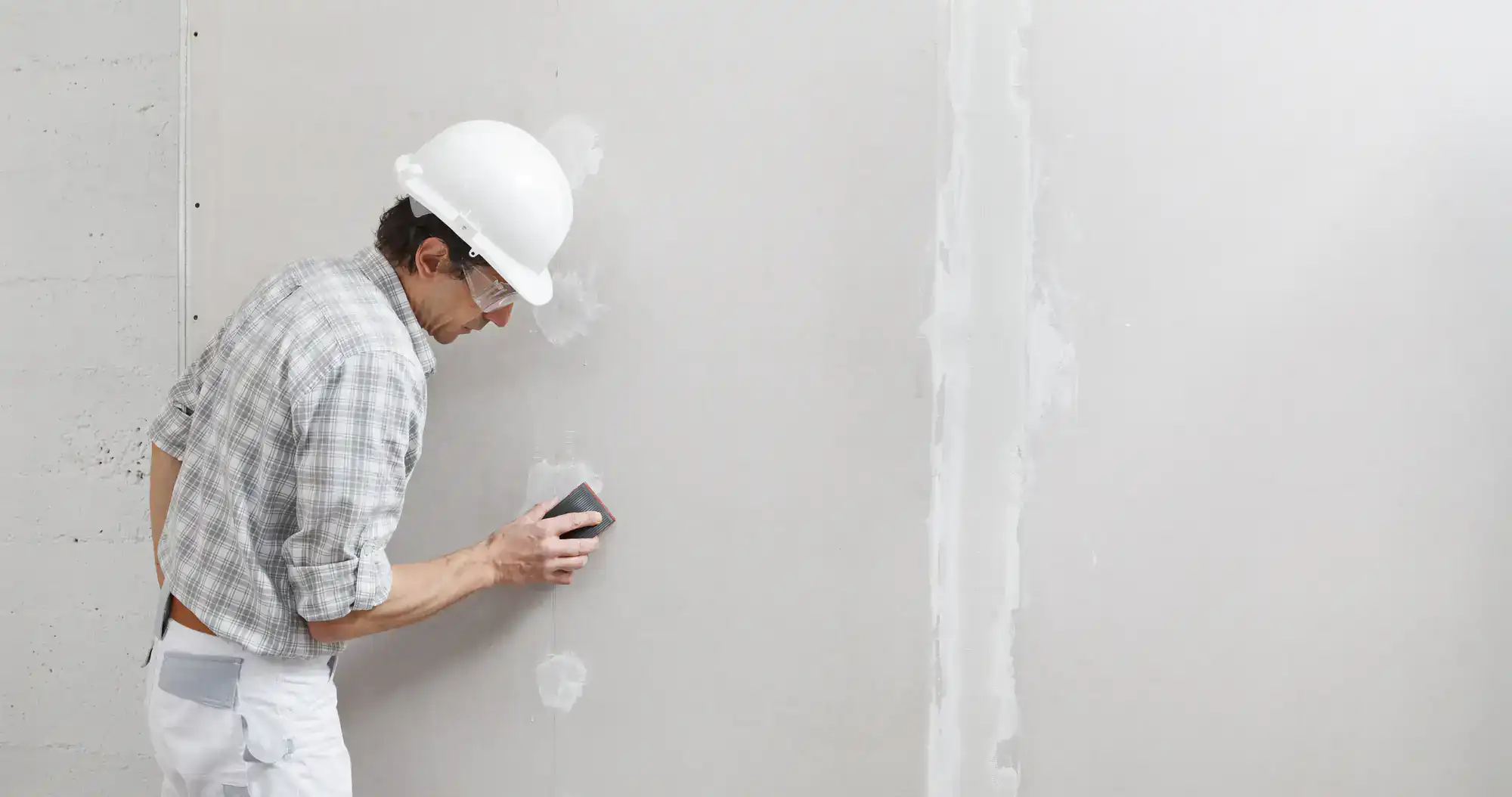
Your walls should disappear into the background. When drywall finishing in Southwest Center City, PA is done right, you don’t notice the seams, the texture matches perfectly, and paint goes on smooth without highlighting every imperfection underneath.
That’s what separates a quick patch job from professional work. The difference shows up immediately after paint—and it stays visible for years. Proper taping, multiple coats of joint compound applied thin and even, and careful sanding between layers create surfaces that look clean from any angle, in any light.
You’re not just covering holes. You’re creating walls that add value to your home, make future updates easier, and give you one less thing to worry about when you walk through your space. That’s the outcome you should expect from drywall finishing services in Southwest Center City, PA.
We’ve worked in Southwest Center City, PA long enough to know what these homes need. The housing stock here includes everything from pre-war rowhomes with plaster underneath to newer builds with standard half-inch board. Each one finishes differently.
We’re licensed, insured, and we show up when we say we will. Our work holds up because we don’t skip steps—even the ones nobody sees. You’ll find us on job sites throughout the neighborhood, handling everything from small repairs to full-room installations.
If you’re renovating one of the older properties in this area, you know the walls don’t always cooperate. We’ve dealt with it all, and we know how to make your finished surfaces look consistent, even when what’s behind them isn’t.
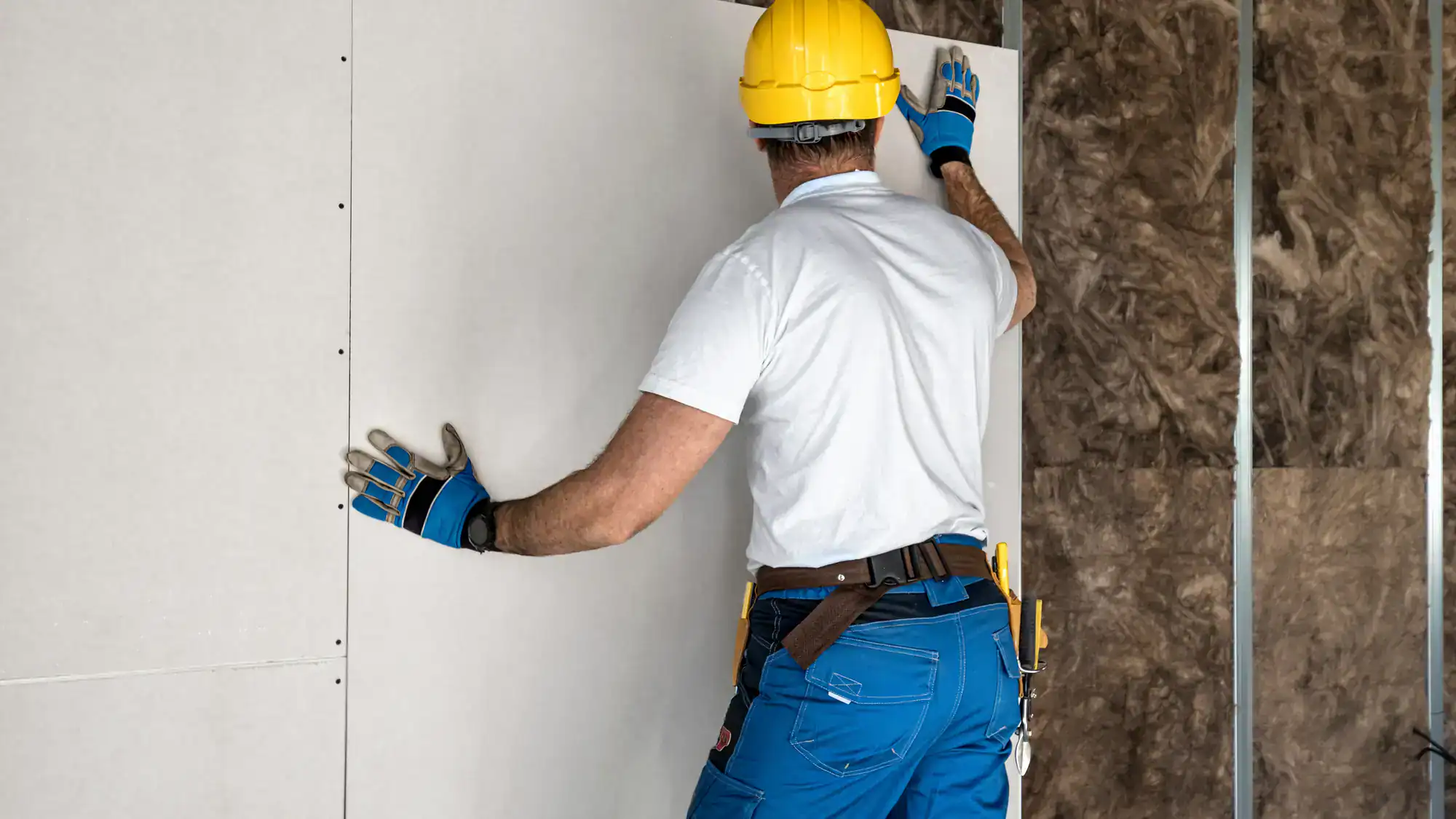
We start by assessing what you’ve got—whether it’s new drywall that needs finishing or repairs that need blending. If there’s damage, we cut it out clean and secure new board properly to the studs. No shortcuts.
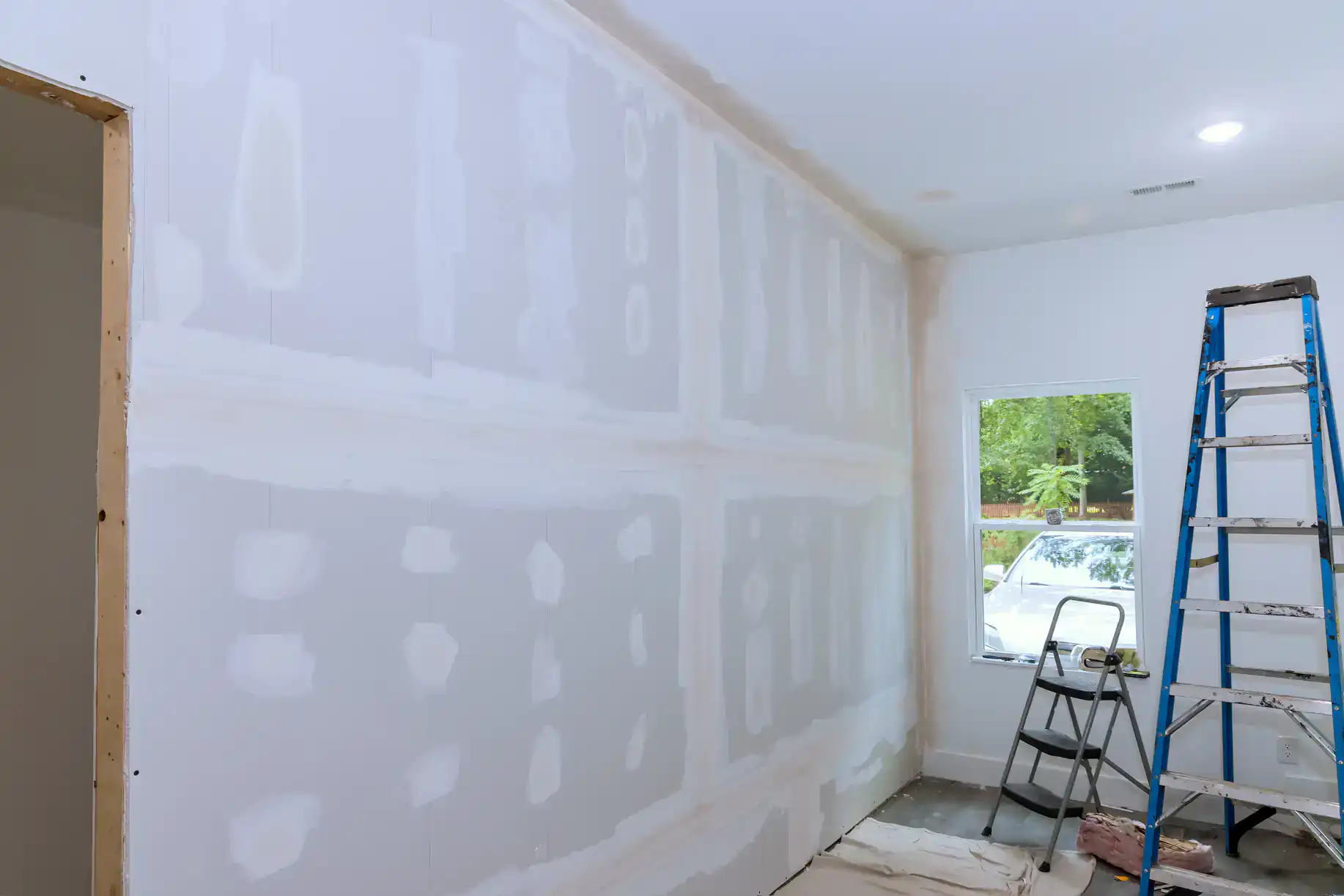
Then comes taping and mudding. We apply paper or mesh tape over every seam, then build up thin layers of joint compound. Each coat gets feathered out wider than the last, so the transition disappears completely. Between coats, we let everything dry fully and sand it smooth. Rushing this part is where most bad drywall jobs go wrong.
For texture matching, we take time to replicate what’s already on your walls—whether that’s orange peel, knockdown, or something custom. We test it first on scrap board so you can see it before it goes on your wall. Once the texture’s right and everything’s cured, it’s ready for primer and paint.
The whole process typically takes a few days, depending on the size of the area. Most of that time is just waiting for coats to dry properly. When we’re done, you shouldn’t be able to tell where the new work starts and the old wall ends.
Ready to get started?
You get the full process—not just the visible parts. That means proper surface prep, multiple coats of joint compound applied and sanded between each layer, and texture matching if your walls aren’t smooth. We also handle priming if that’s part of the scope, so your painter has a consistent surface to work with.
In Southwest Center City, PA, we see a lot of water damage repairs, nail pops from settling, and cracks around door frames. These aren’t just cosmetic issues. If there’s an underlying problem—like a roof leak or structural movement—we’ll point it out before we cover it up. Fixing drywall over an active problem just means you’ll be calling someone back in six months.
We also work with the old plaster walls common in this neighborhood. Sometimes that means installing new drywall over existing plaster, sometimes it means blending a drywall patch into a plaster surface. Either way, the goal is a finished wall that looks uniform and performs well. You won’t see a grid of seams or feel ridges when you run your hand across the surface.
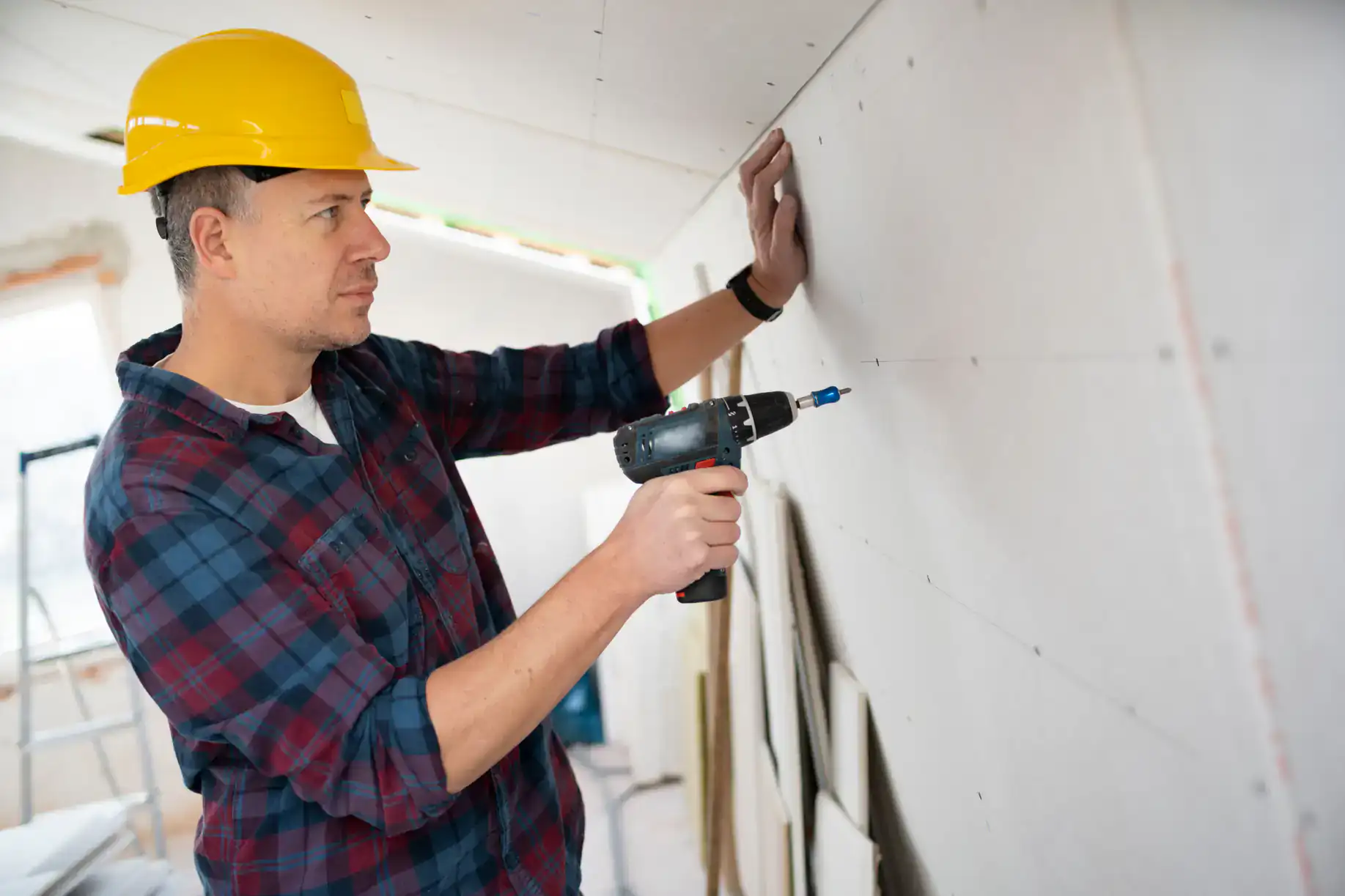
For most residential projects in Southwest Center City, PA, expect three to five days from start to finish. That’s not five days of active work—it’s mostly dry time between coats.
Here’s the breakdown: first coat of mud goes on day one, dries overnight. Second coat day two, dries overnight. Third coat (and sometimes a fourth for higher-level finishes) day three, dries overnight. Sanding and texture usually happen on day four, with final touch-ups on day five if needed.
Small repairs might be faster. A single patch can sometimes be done in two days if conditions are right. Larger jobs—like finishing an entire basement or addition—might stretch to a week or more. Humidity slows everything down, so jobs in summer sometimes take an extra day. We don’t rush the drying process, because that’s where cracks and problems show up later.
The industry uses a scale from Level 0 to Level 5, and it matters more than most people realize. Level 4 is standard for most homes—all joints and fasteners are taped, mudded, and smooth, ready for flat paint or texture. That’s what you’ll get in most rooms.
Level 5 adds a skim coat over the entire surface. You need this if you’re using flat paint, if you have harsh lighting that shows imperfections, or if you’re working with high-gloss finishes. It’s common in Southwest Center City, PA rowhomes where natural light comes in at sharp angles and highlights every flaw. The skim coat creates a completely uniform surface so nothing shows through the paint.
Lower levels exist for spaces like garages or unfinished areas where appearance doesn’t matter. We’ll recommend the right level based on your lighting, paint choice, and how the room will be used. Going too low shows in the final result. Going higher than necessary just costs you money without adding value.
Yes, and this is one of the most common requests we get. Matching texture takes practice, but it’s not magic—it’s about using the right tools, the right mud consistency, and the right technique.
We start by looking at your existing texture under good light. Orange peel, knockdown, skip trowel, and splatter textures all require different approaches. We mix up a sample batch, apply it to a scrap piece of drywall, and show you before we touch your actual wall. If it’s not right, we adjust and try again.
The tricky part is blending new texture into old. Older textures have settled and aged, so brand new texture sometimes looks slightly different even when the pattern matches. We feather the edges and blend gradually so there’s no hard line where the repair stops. In Southwest Center City, PA homes, we’ve matched everything from 1920s plaster textures to modern smooth finishes. If your texture exists somewhere, we can replicate it.
Because the crack is a symptom, not the problem. Something’s moving—either the house is settling, the studs are flexing, or there’s moisture expanding and contracting the drywall.
In Southwest Center City, PA, we see recurring cracks most often above doorways, at ceiling corners, and along seams where walls meet ceilings. These are stress points. When the structure shifts even slightly, the drywall cracks at its weakest spots. If you just fill the crack with spackle, it’ll open back up as soon as the movement happens again.
The fix depends on the cause. Settlement cracks might need reinforcement with fiberglass mesh tape and flexible joint compound. Cracks from framing movement might need the drywall refastened to studs with screws, not nails. Moisture-related cracks need the source fixed first—whether that’s a roof leak, plumbing issue, or condensation problem. We assess what’s causing the crack before we repair it, so you’re not patching the same spot every year.
Depends on what you mean by small, and what the wall looks like when you’re done. A nail hole? You can probably handle that with spackle and paint. Anything bigger than your fist, or anything in a high-visibility area, usually benefits from professional work.
Here’s what goes wrong with DIY repairs: the patch is lumpy or sunken, the texture doesn’t match, the edges aren’t feathered so you see a rectangle on the wall, or the repair cracks within a few months because it wasn’t done in layers. Then you’re either living with an ugly patch or paying someone to redo it anyway.
Professional drywall repair in Southwest Center City, PA costs less than most people expect for small jobs—often a few hundred dollars depending on complexity. You get proper materials, the right number of coats, texture that actually matches, and work that lasts. For walls you see every day, that’s usually worth it. For a garage or basement storage area, maybe not. It comes down to how much the appearance matters to you.
No, but expect some dust and limited access to the work area. Sanding joint compound creates fine dust that gets everywhere, even with proper containment. We use dust barriers and vacuum sanders to minimize it, but some always escapes.
The bigger inconvenience is just staying out of the space while coats dry. You can’t hang pictures, move furniture back, or paint until everything’s fully cured. That usually means the room is off-limits for a few days, but the rest of your home functions normally.
If we’re working in a main living area or kitchen, we’ll coordinate timing so you’re not completely disrupted. Most homeowners in Southwest Center City, PA stay in their homes during drywall work without major issues. The noise is minimal—mostly just sanding and the occasional drill. The mess is manageable if we set up containment properly. If you’ve got respiratory sensitivities or you’re particular about dust, you might want to stay elsewhere during the sanding phase. Otherwise, it’s just a matter of keeping the work area clear and being patient while things dry.
Other Services we provide in Southwest Center City