When drywall finishing is done right, your painter doesn’t call you halfway through the job to say the walls aren’t ready. Your high-gloss paint doesn’t show every imperfection under natural light. And you’re not dealing with cracks along the seams six months down the road because someone rushed the mud work.
Proper finishing means each coat is applied at the right thickness, sanded smooth without gouges, and given time to dry before the next layer goes on. It’s the difference between walls that look good from across the room and walls that look good two feet away under direct sunlight.
Most finishing problems don’t show up until after you’ve painted. By then, you’re either living with it or paying someone else to fix what should’ve been done correctly the first time. That’s why the taping and mudding phase matters more than most homeowners realize—it’s your last chance to get the surface right before paint makes every flaw permanent.
We’ve spent over ten years working on homes throughout Middletown and the surrounding Bucks County area. We’re a locally owned operation, which means when you call, you’re talking to someone who knows the housing stock around here—the older homes with plaster underneath, the newer builds with standard half-inch board, and everything in between.
We’re licensed and insured, and we don’t subcontract the work. The crew that gives you the estimate is the same crew that shows up to do the job. We handle drywall installation and finishing under one roof, so there’s no coordination headache between different contractors, and no finger-pointing if something doesn’t look right.
Middletown homeowners deal with the same issues we see everywhere: contractors who don’t clean up, quotes that balloon once the job starts, and finishing work that looks fine until the paint goes on. We price the job upfront, finish it on schedule, and leave your house cleaner than we found it.
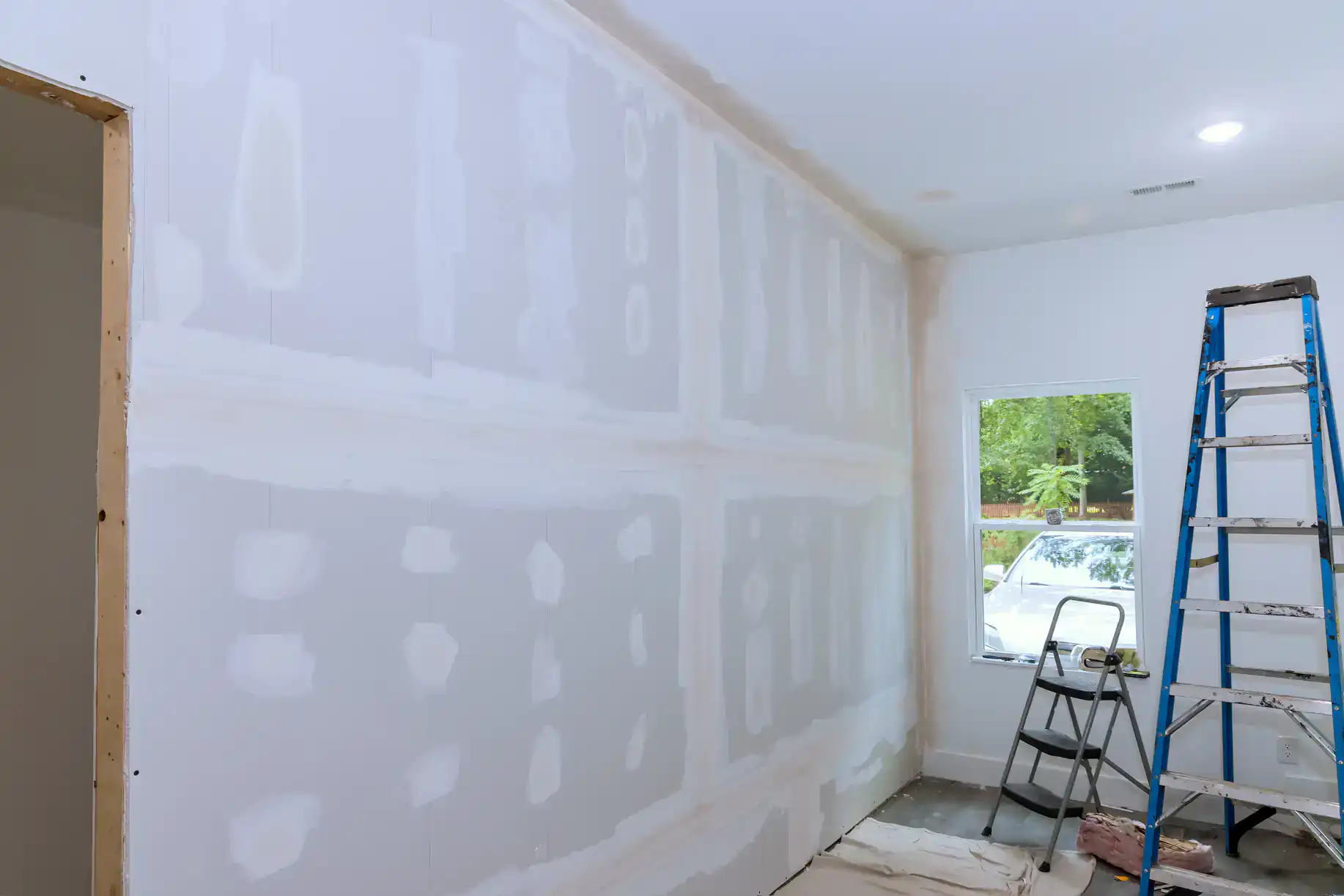
Finishing starts with taping every seam and corner using either paper tape or mesh, depending on what the job calls for. The first coat of joint compound goes over the tape to embed it and fill the gap. This coat doesn’t need to look pretty—it just needs to be solid and cover the tape completely.
After that dries, we apply a second coat that’s wider and smoother, feathering the edges so there’s no ridge where the mud stops. Once that’s dry and sanded, a third coat goes on to level everything out. This is the coat that determines whether your walls look finished or whether you’ll see lines through the paint.
For most residential jobs, we finish to Level 4, which is the standard for walls that’ll be painted with flat or eggshell paint. If you’re using high-gloss paint or you’ve got big windows that flood the room with light, Level 5 finishing adds a skim coat over the entire surface to eliminate any texture variation. It’s more time and material, but it’s the only way to get a completely uniform surface under critical lighting.
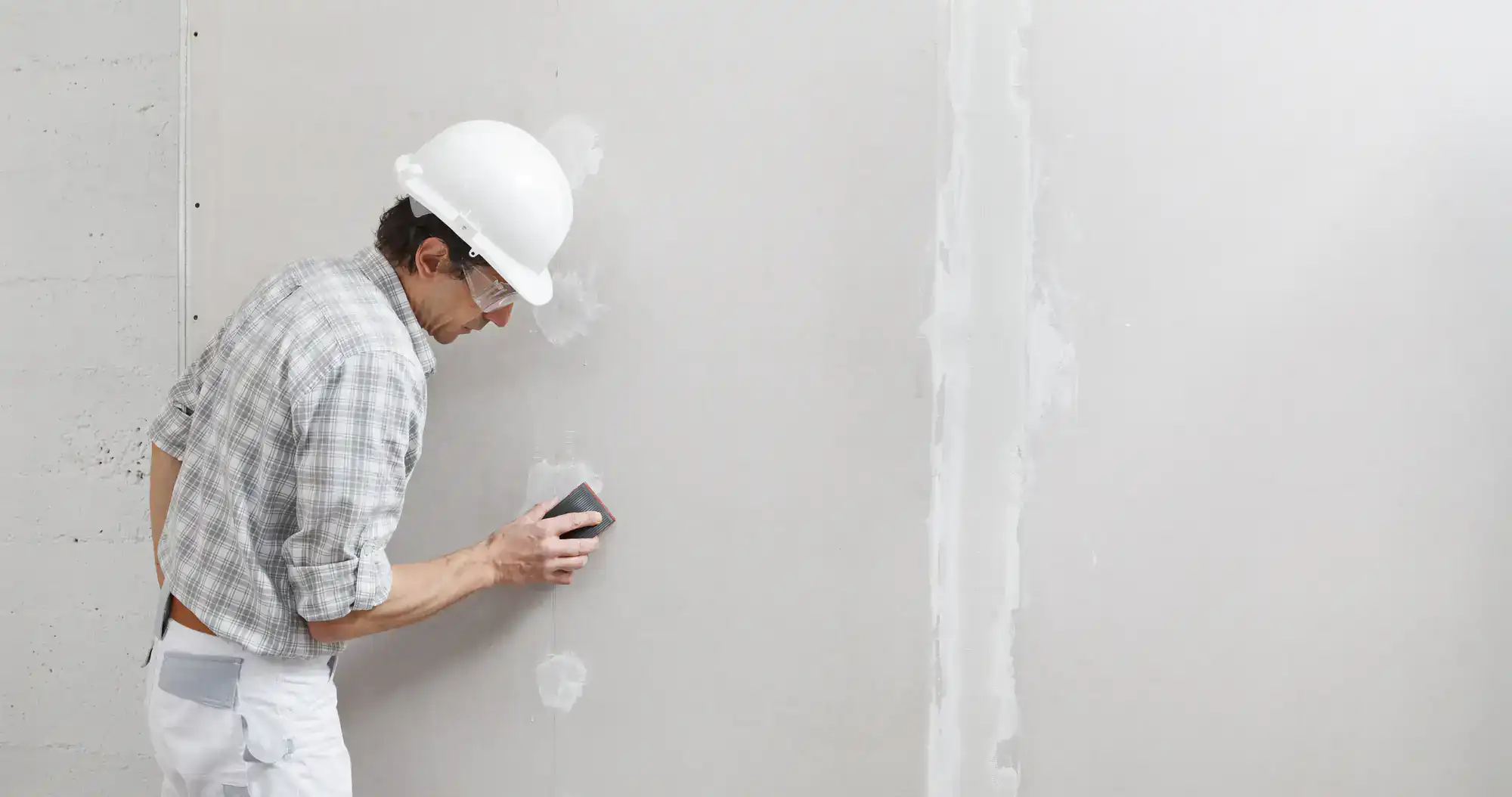
After the final coat dries, we sand everything smooth, vacuum the dust, and wipe down the walls. That’s when you’ll know if the job was done right—the surface should feel consistent from corner to corner, with no bumps, ridges, or soft spots where too much mud was applied.
Ready to get started?
Every finishing job includes taping, mudding, sanding, and complete cleanup. We don’t charge extra to move the furniture back or to vacuum up the dust—that’s part of doing the job correctly. We also don’t charge extra for corner bead installation or for fixing minor imperfections in the drywall before we start finishing. If the board wasn’t hung perfectly, we’ll address it during the finishing process so the final result is smooth.
In Middletown, a lot of the homes we work on are older properties where we’re matching existing textures or blending new drywall into old plaster walls. That takes more skill than finishing a blank room, and it’s something we handle regularly. We’ll also work around your schedule—most finishing jobs take two to four days depending on the size, and we can often arrange start times that don’t interfere with your daily routine.
Pricing for drywall finishing in Middletown typically runs between $1.50 and $3.50 per square foot, depending on the finish level and the condition of the walls. We’ll give you an exact number after seeing the space, and that number doesn’t change unless you change the scope of the work. No surprise fees for extra coats, no upcharges for sanding, and no hidden costs for cleanup.
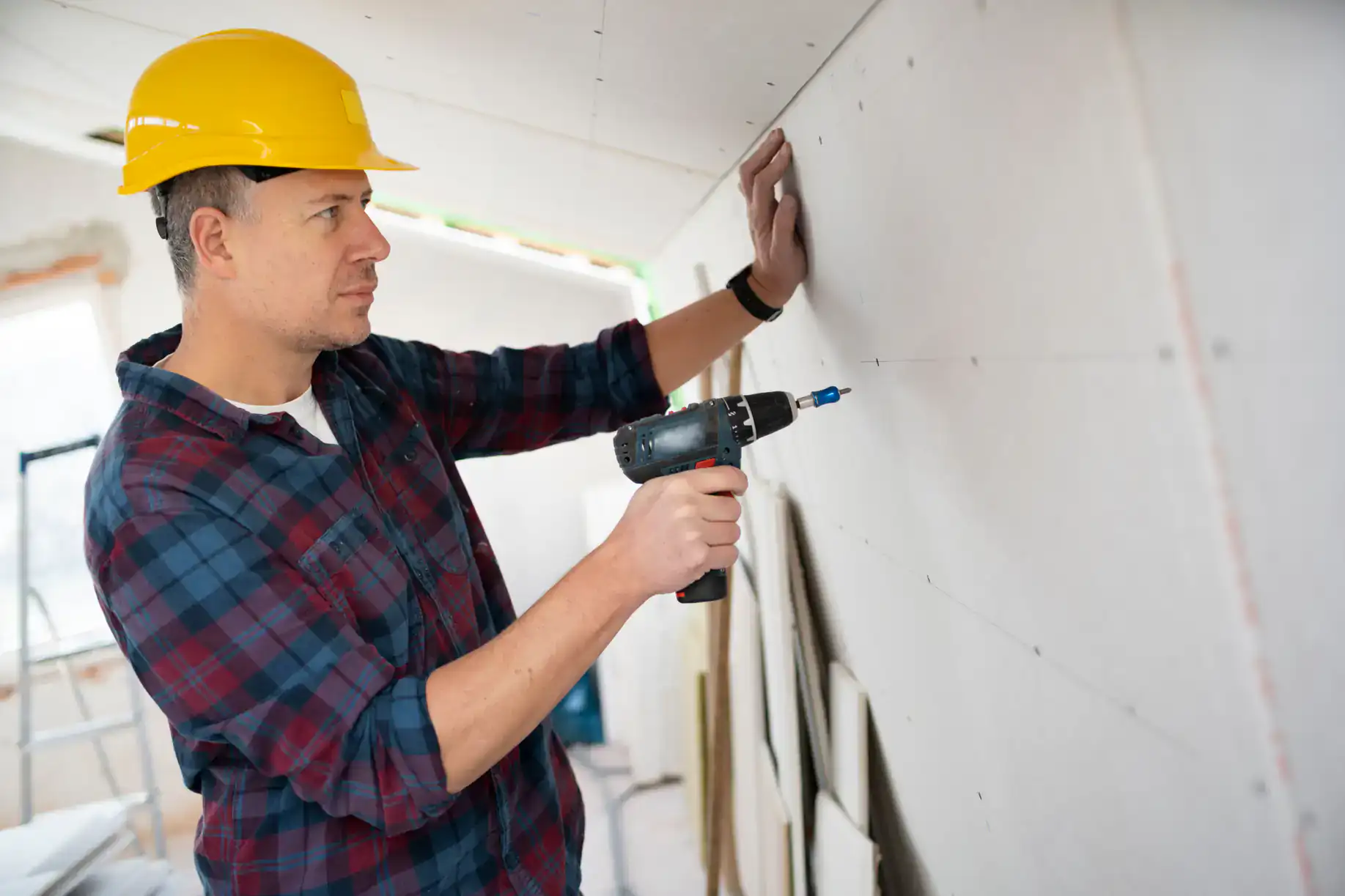
Each coat of joint compound needs at least 24 hours to dry before you can sand it and apply the next coat. Humidity slows that down, and cold temperatures slow it even more. If your house is below 60 degrees or the humidity is above 70%, drying time can stretch to 36 hours or longer.
Rushing the process causes problems. If you sand too early, the mud gums up the sandpaper and leaves rough spots. If you apply the next coat before the previous one is fully dry, you’ll get shrinkage cracks as the lower layer continues to cure. That’s why most finishing jobs take three to four days minimum—it’s not the labor, it’s the drying time between coats.
We don’t use fans or heaters to speed up drying unless the conditions are right. Forced air can cause the surface to dry faster than the interior, which leads to cracking. The compound needs to dry evenly from the inside out, and that happens on its own schedule.
Level 4 finishing is the standard for most residential walls. It includes tape, three coats of mud, and sanding to create a smooth surface that’s ready for paint. Under flat or eggshell paint with normal lighting, Level 4 looks great. It’s what most homes have, and it’s what most painters expect to work with.
Level 5 adds a skim coat—a thin layer of joint compound applied over the entire wall surface, not just the seams. This eliminates any texture variation between the taped areas and the rest of the drywall. It’s necessary when you’re using high-gloss or semi-gloss paint, when you have large windows or skylights that create harsh lighting conditions, or when you’re applying a decorative finish like Venetian plaster that shows every imperfection.
The cost difference is significant—Level 5 typically adds $0.50 to $1.00 per square foot because it requires more material and labor. But if your lighting or paint choice demands it, skipping Level 5 means you’ll see shadows, lines, and texture differences that no amount of paint will hide.
Yes, but it depends on what texture you have. Orange peel and knockdown textures are straightforward to match—we spray the texture, let it set for the right amount of time, and then knock it down to match the surrounding area. Getting the timing and pressure right takes experience, but it’s a standard part of finishing work.
Popcorn ceiling texture is harder to match perfectly, especially if your existing texture has aged or been painted multiple times. The original popcorn was often applied with asbestos-containing material before the 1980s, so if your home is older, we’ll need to test before disturbing it. If it’s safe to work with, we can get close to the original texture, but exact matches are tough because the spray equipment and materials have changed over the years.
Hand-troweled textures and custom finishes require the most skill to match. If your walls have a skip-trowel or Mediterranean finish, we’ll do a test section first to make sure we can replicate it before we commit to the full job. Some textures just can’t be matched perfectly, and in those cases, your best option might be to refinish the entire wall so everything looks consistent.
Cracks that keep coming back usually mean there’s movement in the framing or foundation. Drywall is rigid, so when the wood behind it expands and contracts with humidity changes, or when the house settles, the drywall cracks along the weakest points—typically at seams, corners, and around doors and windows.
If the original taping was done poorly, cracks show up even without structural movement. Mesh tape without enough mud underneath it, paper tape that wasn’t embedded properly, or seams that only got one or two coats instead of three will crack under normal conditions. Fixing these means cutting out the bad work, retaping with the correct technique, and applying enough coats to build a strong, flexible joint.
In some cases, recurring cracks mean you need more than just better finishing. If your house has foundation issues, roof leaks, or framing that’s undersized for the span, those problems will keep cracking your drywall no matter how well it’s finished. We’ll tell you if that’s what we’re seeing, because there’s no point in redoing the finishing work if the underlying structure needs attention first.
Most drywall finishing in Middletown runs between $1.50 and $3.50 per square foot, depending on the finish level and the condition of the walls. A standard bedroom with Level 4 finishing typically costs $400 to $800. A whole-house finishing job after new construction or a major renovation usually falls between $2,000 and $6,000, depending on square footage and whether you need Level 5 finishing in any areas.
Repairs and patches cost more per square foot because there’s setup time, blending work, and often texture matching involved. A single patch might run $150 to $300 depending on size and complexity. If you’re patching multiple areas, the per-patch cost drops because we’re already set up and on site.
We’ll give you an exact price after seeing the job. That price includes all coats, all sanding, and complete cleanup. It doesn’t change unless you change what you want done. No fees for extra coats if we need them to get the surface right, no upcharges for moving furniture, and no surprise costs when we’re finished.
You don’t need to leave, but sanding creates dust that gets everywhere even with good containment. We use dust barriers and vacuum sanders to minimize it, but fine dust still escapes. If you have respiratory issues or you’re sensitive to dust, it’s worth staying somewhere else during the sanding days.
The actual mudding process isn’t disruptive—it’s quiet work that doesn’t create much mess. The sanding is what generates dust, and that typically happens on the third or fourth day of the job. We’ll give you a schedule so you know when the dusty work is happening, and we’ll seal off the work area as much as possible to keep dust out of the rest of your house.
After we’re done sanding, we vacuum everything, wipe down the walls, and clean the floors in the work area. You’ll still want to dust your furniture and change your HVAC filter after the job is complete, but the space will be clean enough to paint as soon as we’re finished.
Other Services we provide in Middletown