You’re not looking at a patch job that screams “something broke here.” You want the hole gone, the texture matched, and the wall ready for paint—or better yet, already painted. That’s what happens when someone knows how to feather the edges properly and doesn’t rush the dry time between coats.
Most drywall patching in Bells Corner, PA fails because the first coat gets slapped on too thick, or the finishing work stops before it should. You end up with a visible hump or a texture that doesn’t match the rest of the room. We don’t skip steps. Joint compound gets applied in thin layers, each one sanded smooth after it dries. The edges blend into your existing wall so gradually that you’d have to know exactly where to look to find the repair.
When we’re done, you’re not staring at an obvious fix every time you walk past. You’re back to a clean wall that doesn’t need explaining to guests or future buyers.
We’ve been handling drywall patching in Bells Corner, PA long enough to know what goes wrong in these homes. Older properties around here weren’t built with perfectly straight framing, and settling creates cracks that reappear if you don’t address what’s causing them. We’ve worked in enough row homes, twins, and older single-family houses to recognize the difference between cosmetic damage and something structural that needs a different approach.
You’re hiring licensed and insured contractors who show up on time, protect your floors, and clean up completely before leaving. We’re not the crew that disappears halfway through or leaves dust on your furniture. This is our reputation in Montgomery and Bucks counties, and we’d like to keep it that way.
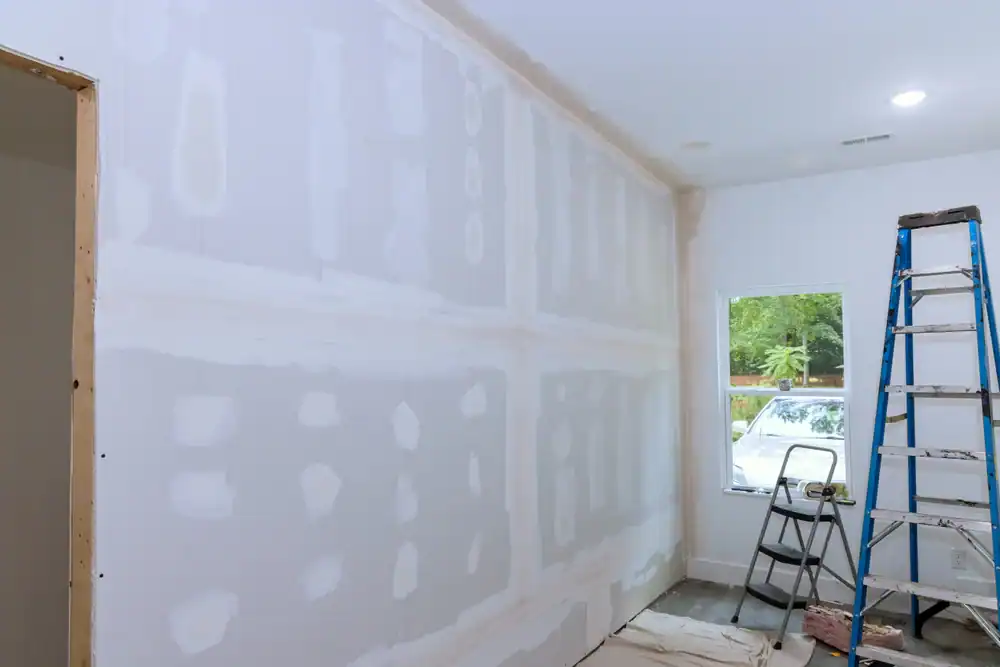
We start by cutting away any damaged drywall and making sure the area is clean and stable. If there’s water damage or mold, that gets addressed before any patching happens—covering up a problem just means you’re paying for the same repair twice. A backer board or support gets installed if the hole is larger than a few inches, giving the new piece something solid to attach to.
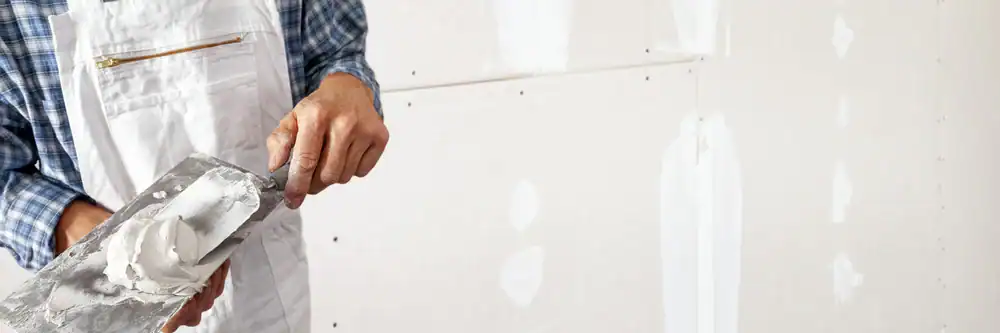
The first coat of joint compound goes on after the patch is secured. This isn’t the time to build up thickness—it’s about covering seams and screw heads with a thin, even layer. Dry time matters here. Rushing it means the next coat cracks or bubbles. Once that first coat is fully dry, we sand it smooth and apply a second coat, feathering the edges out several inches beyond the repair so the transition is invisible.
Finishing means the texture matches. If your walls have knockdown, orange peel, or a smooth finish, that’s what the patch gets. We prime the area so paint adheres correctly, and if you want us to handle the final paint coat, we do that too. Before we leave, the floor protection comes up, the dust gets vacuumed, and you’re left with a clean space and a wall that’s ready to use.
Ready to get started?
Every drywall patching job in Bells Corner, PA includes the materials, labor, and cleanup—no surprise charges for “extras” that should have been part of the quote. You get the drywall mud, tape, primer, and any backer boards or fasteners needed to complete the repair correctly. We bring our own tools, sanders, and vacuum equipment, and we lay down floor protection before we start cutting or sanding anything.
Bells Corner homes, especially the older ones near Cheltenham Avenue, often have plaster walls that were drywalled over or unique textures that take experience to match. We’ve handled enough of these properties to know what works. If your repair involves matching a specific finish or dealing with multiple layers of old paint, that’s standard work for us—not an upcharge situation.
The final step is making sure you’re satisfied with how the wall looks. If the texture isn’t quite right or the paint needs another pass, we handle it before calling the job complete. You shouldn’t have to live with a repair that’s “close enough.” It either blends in completely, or we’re not finished yet.
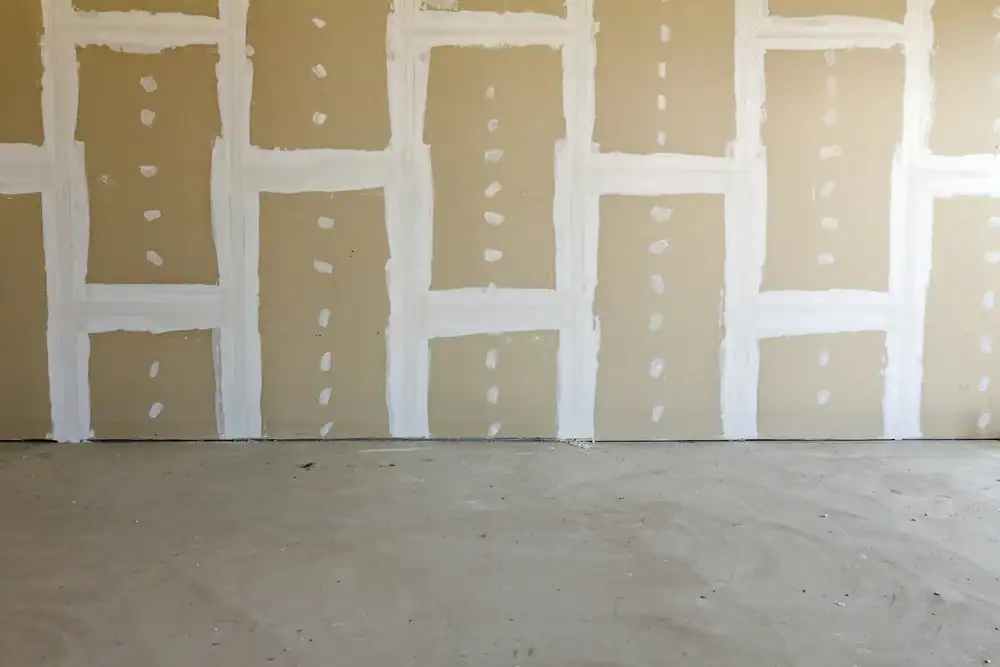
Dry time for joint compound depends on humidity, temperature, and how thick the coat was applied. In Bells Corner, PA, you’re looking at 12 to 24 hours between coats under normal conditions. If it’s humid or cold, that window stretches longer. Rushing this is the main reason patches crack or show visible seams later.
We don’t schedule back-to-back coats on the same day unless conditions are ideal and the layer is thin enough to dry faster. Thicker applications, especially around deep holes or large patches, need a full 24 hours. If you’re doing this yourself and the mud still feels cool to the touch or looks darker in spots, it’s not ready for sanding or another coat.
Proper dry time is what separates a smooth, invisible repair from one that fails in a few months. We’d rather take an extra day and deliver a finish that lasts than rush the process and have you call us back.
Feathering the edges means gradually thinning out the joint compound as you move away from the repair, so there’s no visible ridge or line where the patch ends. If you stop the mud right at the edge of the damaged area, you’ll see and feel a raised border even after sanding. That’s what makes DIY patches so obvious.
The technique involves spreading each coat of drywall mud several inches beyond the previous one, using less pressure as you move outward. By the time you reach the outer edge, the compound is almost translucent. This creates a smooth transition between the repair and the existing wall. It takes multiple thin coats and careful sanding between each layer.
In Bells Corner, PA homes with textured walls, feathering is even more important because any hard edge will show through the texture. We extend the blend far enough that once the texture and paint go on, you can’t tell where the original wall ends and the repair begins.
Yes, but it requires knowing what type of texture you’re working with and having the right tools to replicate it. Older homes in Bells Corner, PA often have knockdown, skip trowel, or hand-troweled finishes that aren’t standard anymore. Matching these means understanding how the original texture was applied and what materials were used.
Knockdown texture, for example, gets sprayed on and then lightly flattened with a trowel before it dries. The timing and pressure determine the final look. If your walls have a smooth finish, that’s a different process—multiple coats of joint compound sanded to a glass-like surface. Orange peel texture uses a specific spray consistency and air pressure to create that bumpy pattern.
We’ve worked in enough Bells Corner, PA properties to recognize these finishes and replicate them accurately. If your wall has a custom or unusual texture, we test the technique on a scrap piece first to make sure it matches before applying it to the actual repair. You shouldn’t be able to spot the patch once we’re done with the finishing work.
Small holes—the kind left by doorknobs or wall anchors—typically run between $150 and $300 per patch, depending on the texture and how many coats are needed. Larger repairs, like sections damaged by water leaks or furniture impacts, range from $300 to $600. If you’re dealing with multiple rooms or significant damage that requires replacing entire sheets, costs go up from there.
What affects the price is the size of the damage, the type of wall finish, and whether there’s underlying damage that needs fixing first. A simple hole in a smooth wall costs less than matching a complex knockdown texture across a water-damaged ceiling. If mold remediation or structural repairs are needed before patching, that’s a separate scope of work.
We give you an upfront price after seeing the damage in person. That quote includes materials, labor, and cleanup—no surprise fees for “unforeseen” work that should’ve been obvious from the start. If the scope changes because we find additional damage once the wall is opened up, we discuss it with you before proceeding. You’ll know what you’re paying before any work begins.
Yes. Primer is necessary because joint compound and new drywall absorb paint differently than your existing wall. If you skip primer and go straight to paint, the patched area will look flat or discolored compared to the surrounding surface—even if you use the exact same paint. Primer seals the repair and creates a uniform base for the topcoat.
We include priming in our drywall patching service in Bells Corner, PA. Once the final coat of mud is sanded smooth and the texture is applied, we prime the entire repaired area. If you want us to handle the paint as well, we can do that—it’s easier than trying to match the color and sheen yourself. If you prefer to paint it on your own, the primed surface is ready to go as soon as the primer dries.
One coat of paint over primer is usually enough if the surrounding wall is in good condition. If the existing paint is faded or worn, you might need to paint the entire wall to avoid a visible difference in color. We’ll let you know what to expect based on the condition of your walls during the estimate.
If the damaged area is larger than about 12 inches across, or if the drywall is crushed, water-damaged, or separating from the studs, patching becomes less effective than replacing the section. Small holes and shallow dents are perfect for patching. Large holes, sagging sections, or areas with mold growth usually need the drywall cut out and replaced.
Water damage is the main situation where patching doesn’t make sense. If the drywall stayed wet long enough to soften, lose its structure, or develop mold, cutting it out is the only real fix. Patching over compromised drywall just hides the problem temporarily—it’ll fail again, and you’ll pay twice. Same goes for areas where the paper facing is torn or peeling away in large sections.
During an estimate for drywall patching in Bells Corner, PA, we’ll tell you honestly whether patching is the right approach or if replacement makes more sense. Sometimes replacing a full sheet costs less in the long run than trying to patch severe damage that won’t hold up. You’ll get a clear recommendation based on what’s actually wrong with your wall, not what’s easiest for us to sell.
Other Services we provide in Bells Corner