You’re living with cracks that keep coming back, water stains that won’t disappear under paint, or patches that look worse than the original damage. The problem isn’t always the repair itself—it’s that whoever did it didn’t understand how old Philadelphia homes move and settle.
Drywall finishing in Washington Square West, PA means working with plaster substrates, uneven framing, and walls that have been there longer than most contractors have been alive. When the work’s done right, you can’t tell where the repair ends and the original wall begins. The texture matches. The surface is smooth where it should be smooth. And it stays that way after the next season of settling.
You’re not looking for someone to slap mud on a hole. You need someone who knows how to prep the surface, apply the right number of coats, and match whatever finish is already on your walls—whether that’s smooth, knockdown, or something in between. That’s what actually makes a repair invisible.
We handle drywall installation and finishing across Montgomery, Bucks, and Philadelphia counties. That means we’ve been inside plenty of Washington Square West row homes—the narrow staircases, the shared walls, the plaster that’s been painted over a dozen times.
We know what it takes to work in tight spaces without tearing up your floors or leaving dust on everything you own. We also know that most of the homes in this neighborhood weren’t built with drywall, so when repairs happen, they need to integrate with what’s already there. Our crews are licensed, insured, and used to the specific challenges that come with historic construction in this part of Philadelphia.
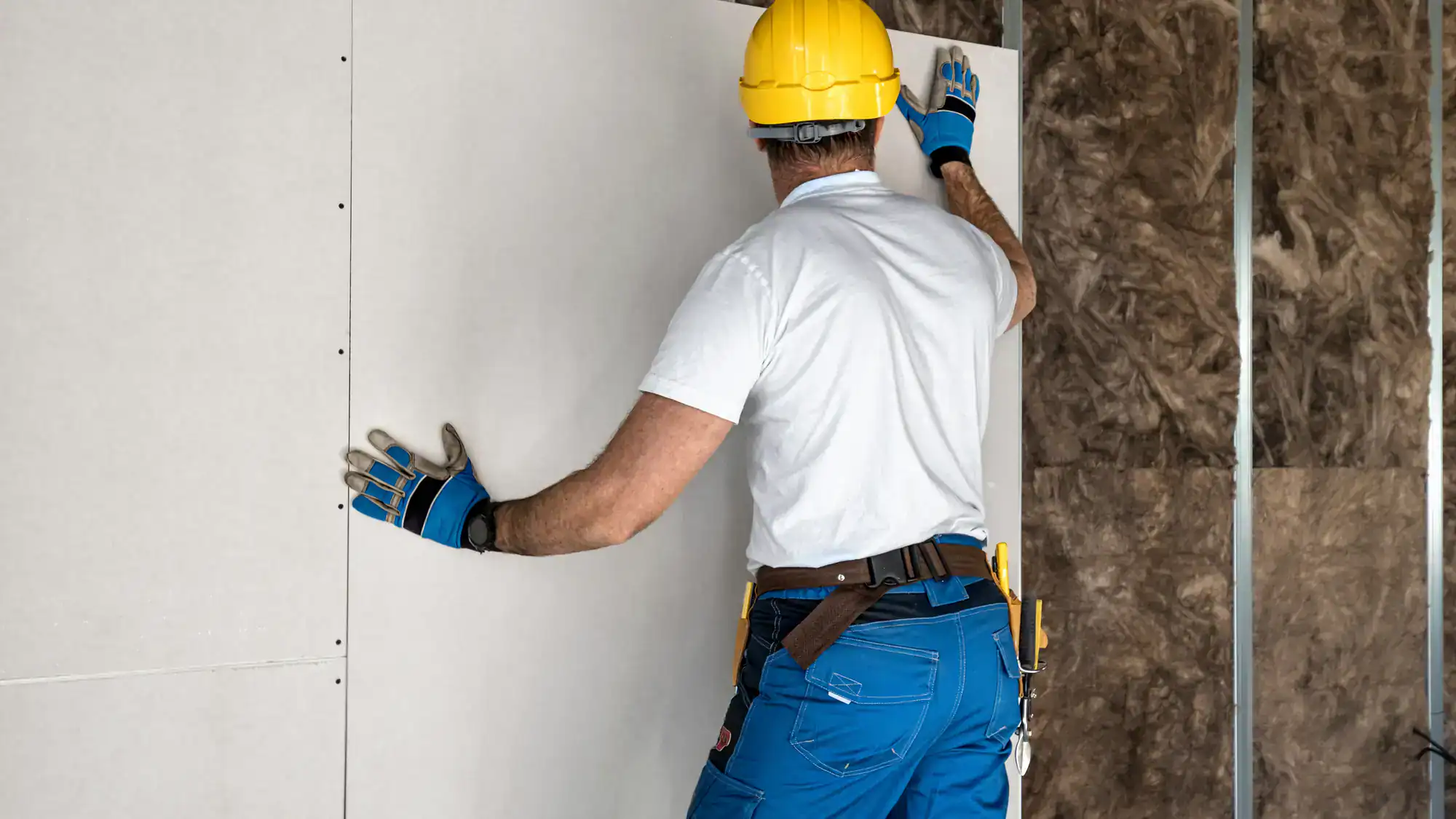
We start by protecting your floors and furniture with drop cloths, then assess what’s actually causing the damage. If it’s a settling crack, we need to address the underlying movement. If it’s water damage, we confirm the source is fixed before we cover anything up.
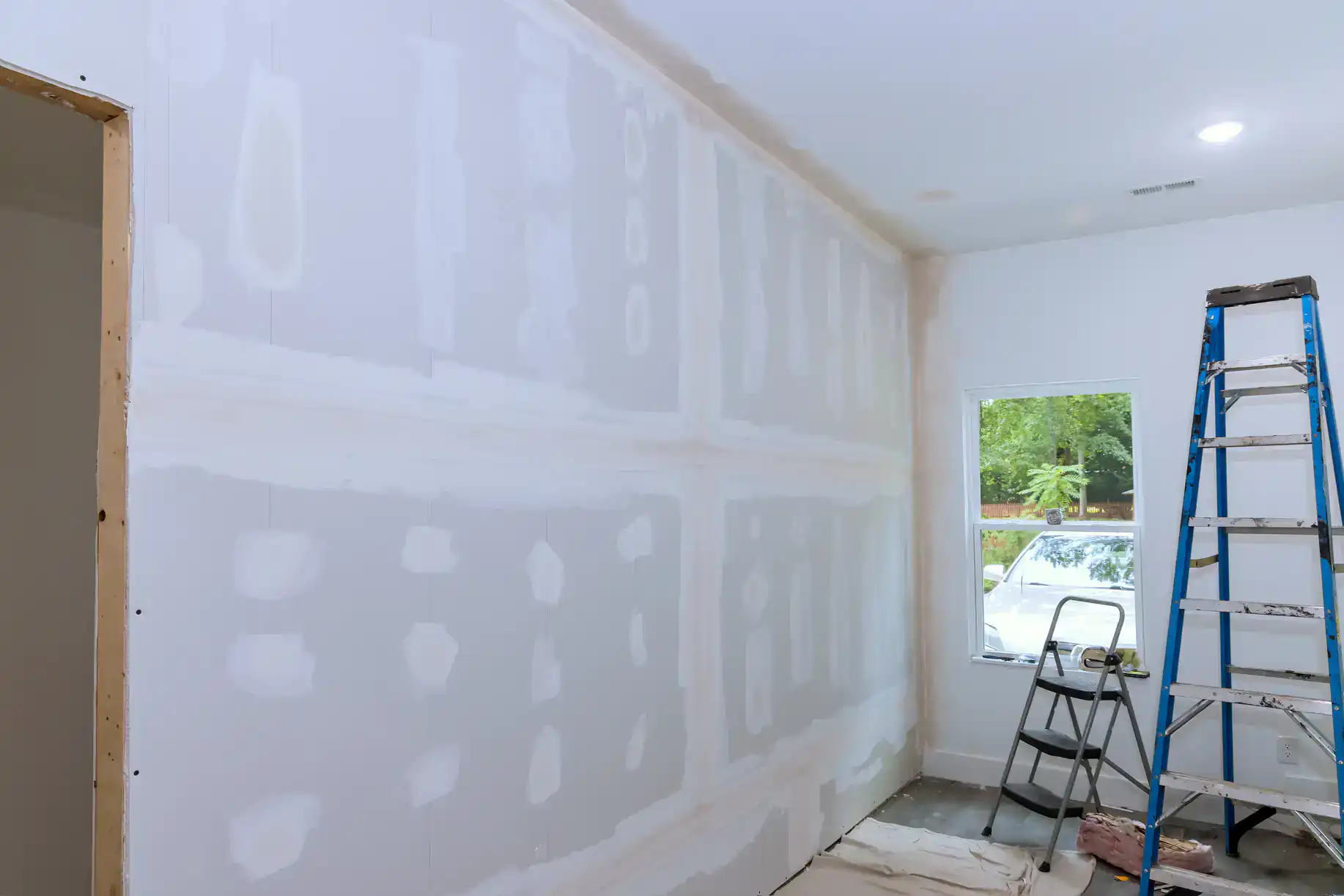
Next comes the prep work—cutting out damaged sections, securing backing where needed, and making sure the edges are clean. Then we apply joint compound in layers. The first coat embeds the tape. The second and third coats build up the surface and feather the edges so there’s no visible line between old and new. Each coat has to dry completely before the next one goes on.
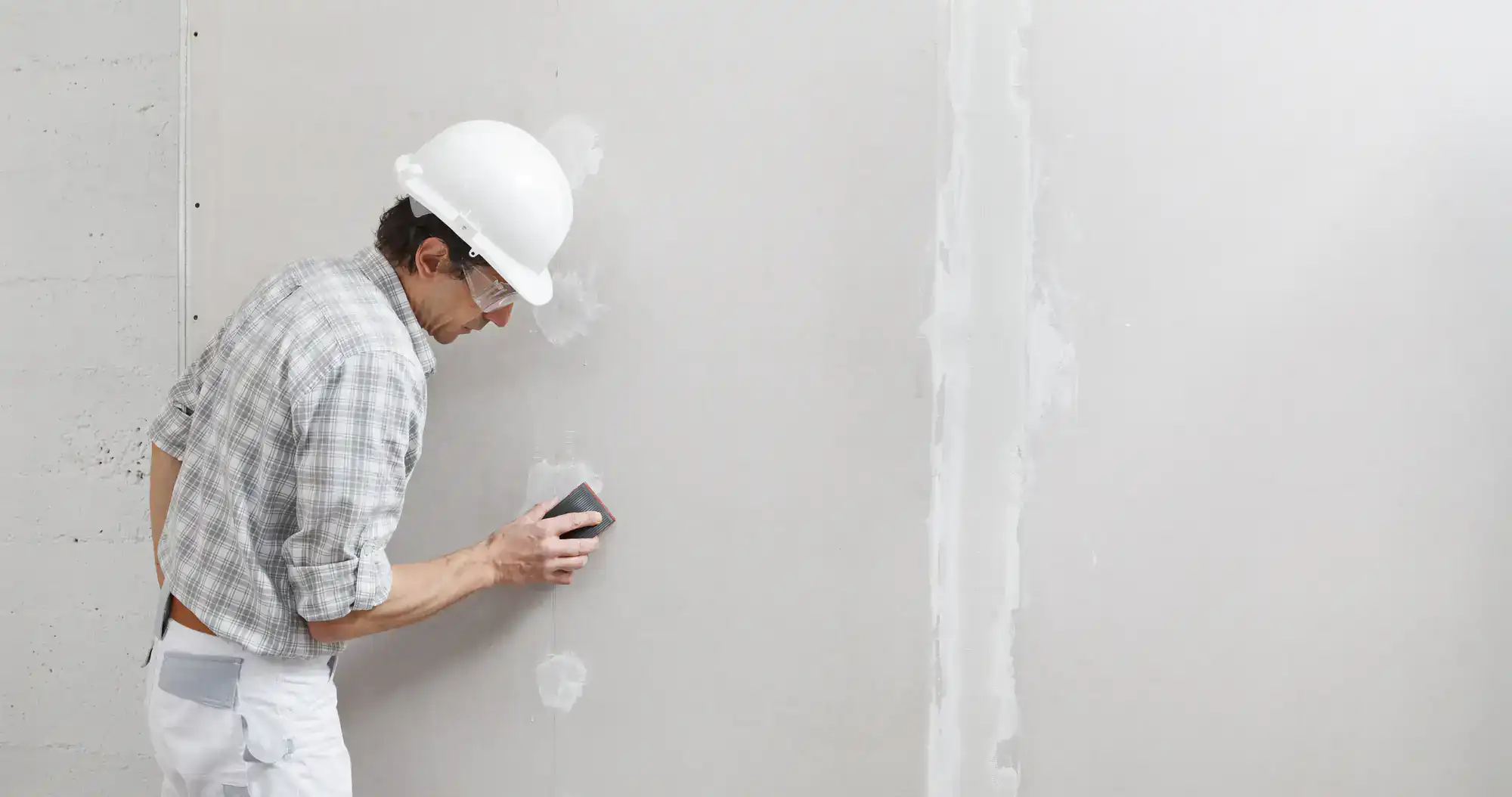
After the final coat dries, we sand it smooth using dust-free equipment. If your walls have texture, we match it before priming. Most small repairs are done in a few hours. Larger jobs might take a full day, but you’re not waiting weeks for drywall taping and mudding in Washington Square West, PA to be finished.
Ready to get started?
You’re getting the full process—not just the mudding, but the taping, sanding, texture matching, and cleanup. We bring our own dust-free sanders and protective sheeting. If you need a Level 5 finish for high-gloss paint or critical lighting areas, we do that too. It’s a skim coat over the entire surface that eliminates any imperfections.
For Washington Square West homes, we’re often working with moisture issues from old basements or shared walls with poor ventilation. We use moisture-resistant materials where it makes sense and can handle mold remediation if that’s part of the picture. We also deal with the realities of row home construction—fire-rated drywall on party walls, narrow access points, and making sure we’re not creating problems for your neighbors.
Most drywall repair near me searches come from people who’ve already tried a handyman or a general contractor who didn’t specialize in this kind of work. What you’re paying for here is someone who does this specific task repeatedly and knows how to handle the variables that come up in older homes. That includes matching textures you can’t even buy anymore and working around original trim that can’t be replaced.
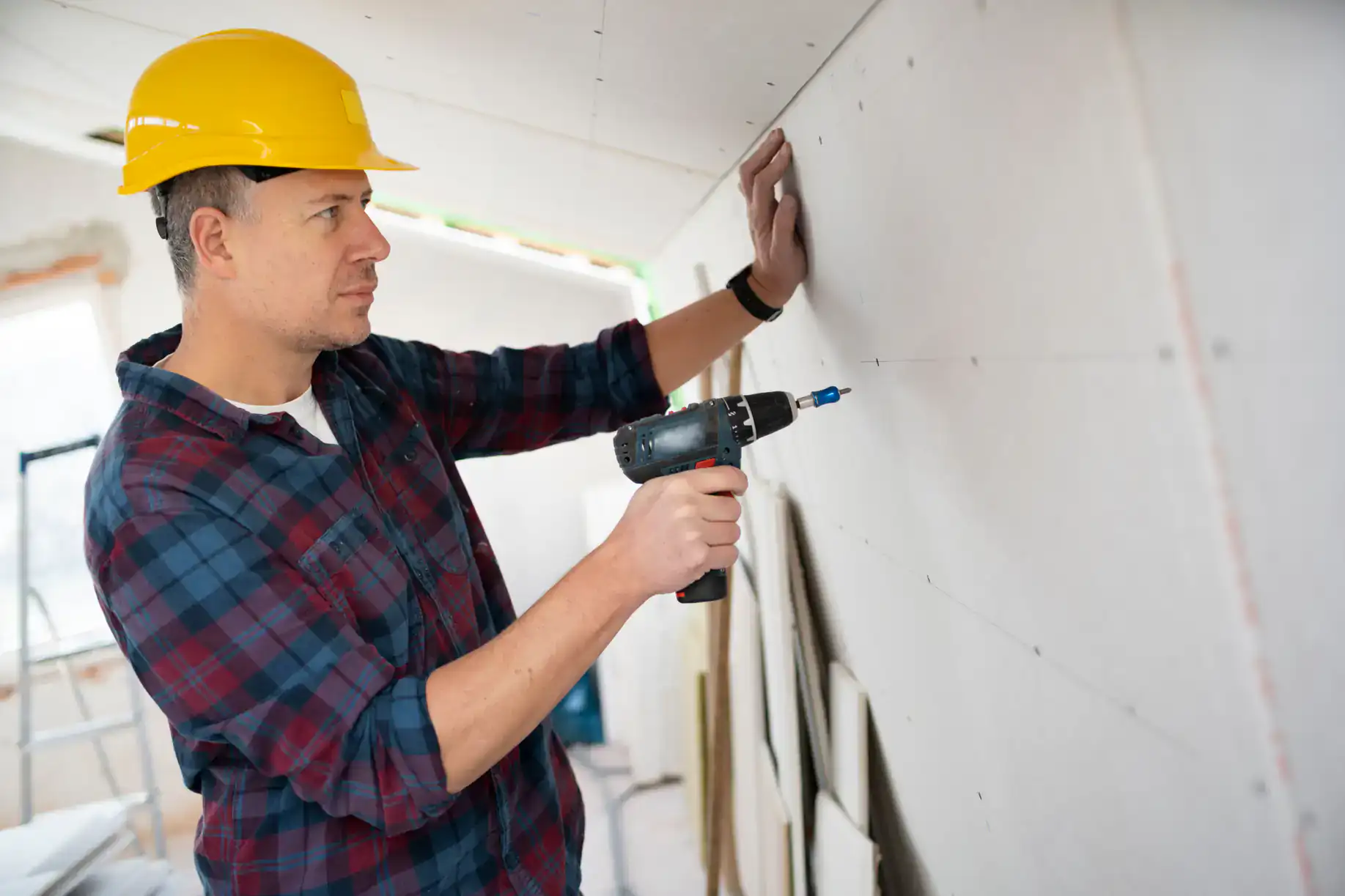
Small repairs—holes, cracks, minor water damage—are usually done in a few hours. You’re looking at two to three coats of joint compound with drying time in between, so the actual work might only take an hour or two, but the full process spans four to six hours once you factor in dry time.
Larger jobs, like finishing an entire room or repairing significant water damage, take a full day or sometimes two. The limiting factor is always drying time. We can’t sand until the mud is completely dry, and we can’t apply the next coat until the previous one has cured. Humid basements or cold weather can slow that down.
If your home has plaster walls and we’re patching into those, there’s sometimes extra prep work to make sure the new drywall integrates properly. That can add a few hours, but it’s necessary if you want the repair to last and look right.
Yes, but it depends on what’s there. Most common textures—orange peel, knockdown, skip trowel—we can replicate pretty accurately. If your walls have a smooth finish, that’s actually the most demanding because every imperfection shows up, especially under certain lighting. That’s where a Level 5 finish comes in.
Some older homes have hand-troweled plaster textures that are harder to match perfectly. We can get close, but if the original was done by hand decades ago, there’s going to be some variation. In those cases, we’ll show you a sample on a scrap piece before we apply it to your wall so you know what to expect.
The key is having someone who’s done this enough times to know which tools and techniques produce which textures. A lot of failed DIY repairs happen because someone bought a spray can of texture and hoped for the best. It never looks right. We use the same methods that were likely used on your walls originally, adjusted for whatever substrate we’re working with.
Usually it’s movement. Houses settle, especially older row homes in Philadelphia. When the structure shifts, even slightly, it creates stress points where walls meet ceilings or where door frames are installed. If someone just fills the crack with spackle and paints over it, the crack comes back as soon as the house moves again.
The fix is to use mesh tape or paper tape embedded in joint compound, which gives the repair some flexibility. We also look at what’s causing the movement. Sometimes it’s a foundation issue. Sometimes it’s seasonal expansion and contraction. Sometimes it’s just the house doing what old houses do.
If the cracks are severe or getting worse, that’s a structural problem that needs to be addressed before any cosmetic repair will hold. We’ll tell you if that’s the case. But most of the time, the cracks are just normal settling, and a properly taped and mudded repair will hold up for years as long as the underlying cause isn’t getting worse.
We handle the drywall side of water damage, but the water source has to be fixed first. If your basement flooded and the drywall got soaked, we’ll cut out the damaged sections, check for mold, treat it if necessary, and install new moisture-resistant drywall. Then we finish it so it matches the rest of the wall.
Water damage is common in Washington Square West because a lot of these homes have old plumbing, poor drainage, or basements that weren’t built with modern waterproofing. The drywall usually shows stains, soft spots, or visible mold growth. Once the material is compromised, it has to be replaced—you can’t just paint over it.
We also handle ceiling repairs from roof leaks or upstairs plumbing issues. Same process: remove the damaged material, confirm the leak is fixed, replace and finish. If there’s significant mold, you might need a remediation specialist before we start, but we can coordinate that and handle the drywall work once it’s cleared.
Small repairs—patching a few holes or fixing a crack—usually run a few hundred dollars. Larger jobs, like finishing a full room or repairing extensive water damage, typically fall between $1,000 and $3,000 depending on the square footage and the level of finish you need.
The cost depends on how much surface area we’re covering, how many coats are required, and whether there’s any demo or prep work involved. A Level 5 finish costs more than a standard Level 4 because it requires an additional skim coat over the entire surface. Texture matching can also add time if the existing texture is complex.
We give you an upfront estimate that includes materials, labor, and cleanup. No surprise charges. If we run into something unexpected—like hidden water damage or mold—we’ll talk to you before doing any additional work. Most homeowners in this area are spending between $1.50 and $3.50 per square foot for professional drywall finishing, which is consistent with what we charge.
Level 4 is the standard finish for most homes. It means the joints are taped, mudded, and sanded smooth, and the surface is ready for paint or texture. You’ll see this on most walls and ceilings, and it looks fine under normal lighting with flat or eggshell paint.
Level 5 adds a skim coat of joint compound over the entire surface, not just the seams. This creates a completely uniform texture and hides any minor imperfections that might show up under harsh lighting or with high-gloss paint. If you’re using semi-gloss or gloss paint, or if you have large windows or track lighting that create strong shadows, Level 5 is worth it.
Most people don’t need Level 5 for every wall in their home. It’s typically used in high-visibility areas—living rooms with lots of natural light, hallways with glossy trim paint, or feature walls where you want a perfectly smooth finish. It costs more because it’s an extra step, but the result is noticeably cleaner if your lighting or paint choice would otherwise highlight imperfections.
Other Services we provide in Washington Square West